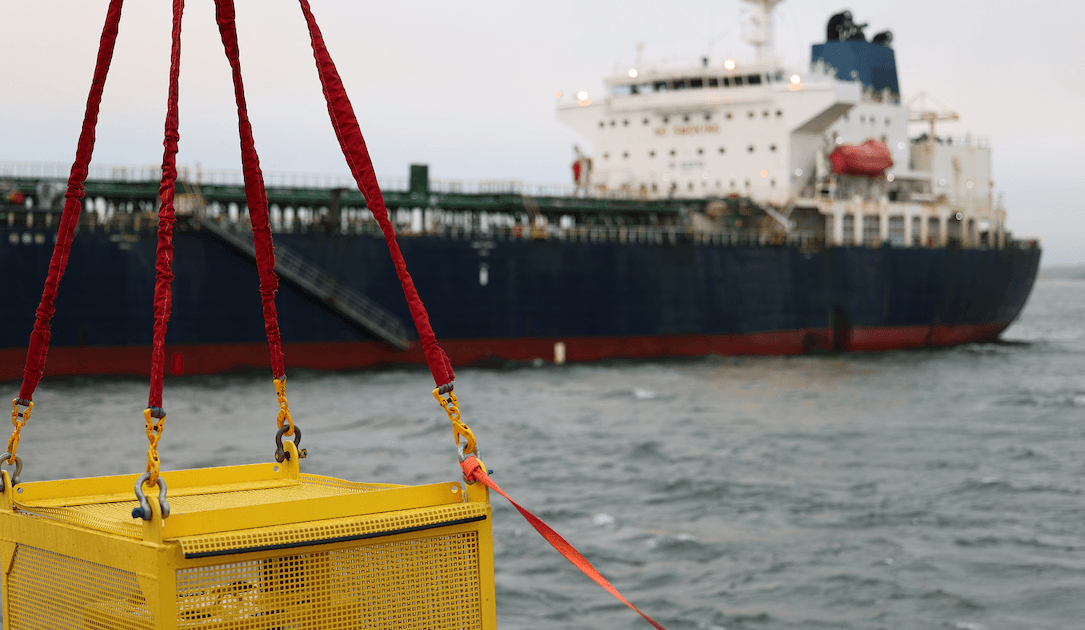
The Eagle S cable case is back before a Finnish trial court after the Helsinki Court of Appeal overturned an October 2025 dismissal that had stopped the prosecution on jurisdictional grounds. The appeal ruling does not decide whether the three senior officers committed the alleged offenses. It decides that Finland can hear the case, then sends it back to Helsinki District Court for a ruling on the facts.
The officers had been charged over damage to the EstLink 2 electricity interconnector and four telecommunications cables in the Gulf of Finland on Dec. 25, 2024. Eagle S, a Cook Islands-registered oil tanker described by multiple reports as Russia-linked, was accused of dragging an anchor across the seabed. The defendants have denied wrongdoing, according to AFP and Submarine Networks.
The earlier district court decision concluded that Finnish criminal law could not be applied because of jurisdictional limits under the UN Convention on the Law of the Sea, or UNCLOS. That decision also dismissed associated civil claims. The appeal court reached the opposite conclusion: according to Recorded Future News, the alleged offenses were committed in Finland because the physical damage and effects on Finnish electricity and telecommunications services occurred there.
Why can Finland prosecute the Eagle S officers?
The appellate court’s answer turns on what happened after Finnish authorities contacted the tanker, rather than on a final finding about why the anchor initially fell.
The court accepted that the initial anchor drop could potentially qualify as an accident. But it held that the later alleged conduct did not receive UNCLOS protection for a maritime accident. Recorded Future News reported that Finnish authorities contacted the ship at 3:20 p.m. on Dec. 25, and that the crew then falsely said both anchors had been raised and secured. The vessel allegedly continued for roughly 90 kilometers for more than three hours while dragging its port anchor, severing four additional cables.
That distinction is narrow but consequential. An accident at sea can limit which country has criminal jurisdiction under UNCLOS. The appeal court found that the alleged continued conduct after official contact fell outside that category, clearing the way for a Finnish merits hearing.
What happens next in the Eagle S cable case?
Helsinki District Court must now consider the prosecution itself. The three officers, previously detained in Finland, have since left the country, Recorded Future News reported. The appeal ruling is also not final: an appeal to Finland’s Supreme Court is possible if the court grants leave, with an Oct. 26, 2026 deadline reported by Recorded Future News.
The legal fight has substantial civil stakes alongside the criminal case. Fingrid, Finland’s state grid operator, and Estonian counterpart Elering, which jointly own EstLink 2, seek about €105 million from the officers, according to Recorded Future News. The figure includes €55.3 million in repair costs and €50 million in claimed lost income.
The ruling does not establish sabotage or Russian state direction. Recorded Future News said officials in several North and Baltic Sea countries had reported growing confidence that recent cable incidents were accidental rather than directed by the Kremlin. The court’s decision addresses jurisdiction and the alleged conduct of Eagle S’s officers, not that broader geopolitical question.
This story draws on original reporting from The Record.