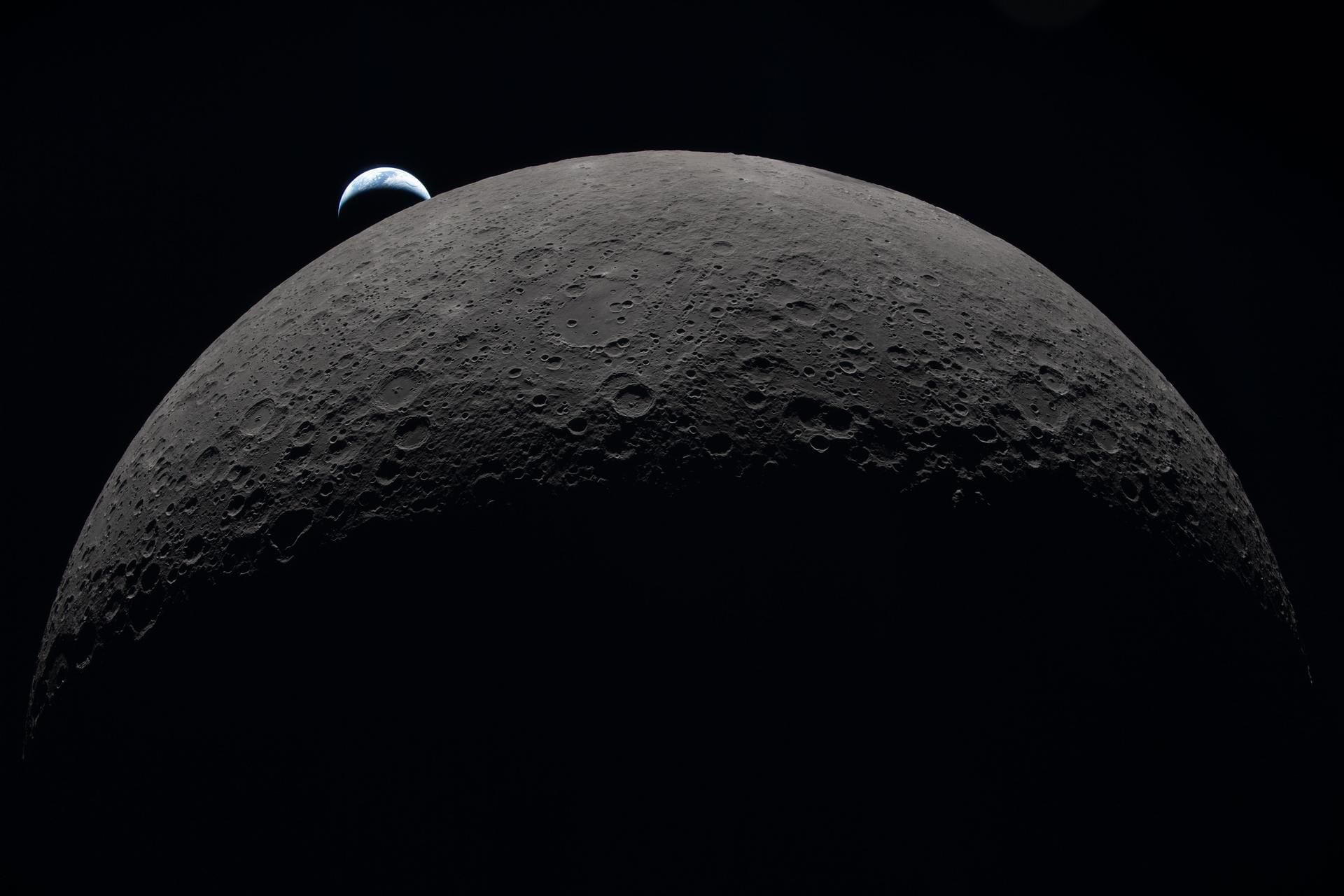
A lunar biocontainment facility should be built to quarantine extraterrestrial samples before they reach Earth, according to a study published in May in Ambio. Frederick I. Moxley of Strategic Threat and Analysis Research Laboratories and Anthony Ricciardi of McGill University argue that the Moon could act as a buffer if material from Mars or other bodies contains unfamiliar biology.
The proposal is aimed at a problem space agencies prefer to treat as low-probability but high-consequence: what happens if a returned rock, soil sample, or other material carries active or dormant life. The United States and China both have programs intended to bring samples back from the Martian surface in the coming years, while earlier missions have already returned asteroid material.
Moxley and Ricciardi are not saying alien organisms have been found. Their paper argues that sample-return planning should account for the possibility before a capsule lands on Earth and somebody has to explain why the planetary protection plan was basically optimism in a clean room.
What is a lunar biocontainment facility?
A lunar biocontainment facility would be a quarantine site on the Moon for samples collected from Mars or other celestial bodies. The idea is to keep those materials away from Earth’s biosphere until researchers determine whether they are biologically safe.
Biocontainment means controlling where potentially hazardous biological material can go and who or what it can contact. In this case, the proposed containment boundary is not just a lab wall or a sealed cabinet, but the distance between Earth and the Moon.
The mechanism is straightforward enough: returned samples would stop at a lunar facility rather than head directly to Earth. Scientists could then test and store them in isolation, reducing the chance that any unknown organism, if present, could escape into terrestrial ecosystems.
Why put a quarantine facility on the Moon?
Moxley and Ricciardi point to terrestrial examples where biology has refused to behave politely. They cite viral strains that have escaped containment and species that prosper after entering environments unlike the ones in which they evolved. Their argument is that unknown life, if it exists elsewhere, should not be assumed to be less adaptable than Earth life.
The risk they describe is not limited to infection in the familiar sense. The researchers write that extraterrestrial life might use unusual molecular architecture, including reversed chirality or alternative nucleic acid analogs. In plain English: alien biology could be built differently enough that Earth’s ecosystems, and possibly human biology, would not have obvious defenses or compatibility rules.
That uncertainty is the core of the paper. If samples from Mars or another body contained active or dormant biological entities, the authors warn, Earth could be exposed to a novel organism with unpredictable ecological or pathogenic effects.
The researchers frame the Moon as more than a staging post for missions. They argue it should also serve as a “preemptive shield” between Earth and possible extraterrestrial contamination, with formal quarantine protocols established before sample traffic increases.
They also make the budget argument in blunt terms: the cost of a lunar biocontainment facility would be small compared with the potential ecological damage from an invasive extraterrestrial organism. That is a claim about relative risk, not a priced engineering plan. The paper, as described, makes the case for the precaution. It does not turn the Moon into a funded construction site.
This story draws on original reporting from 404 Media.