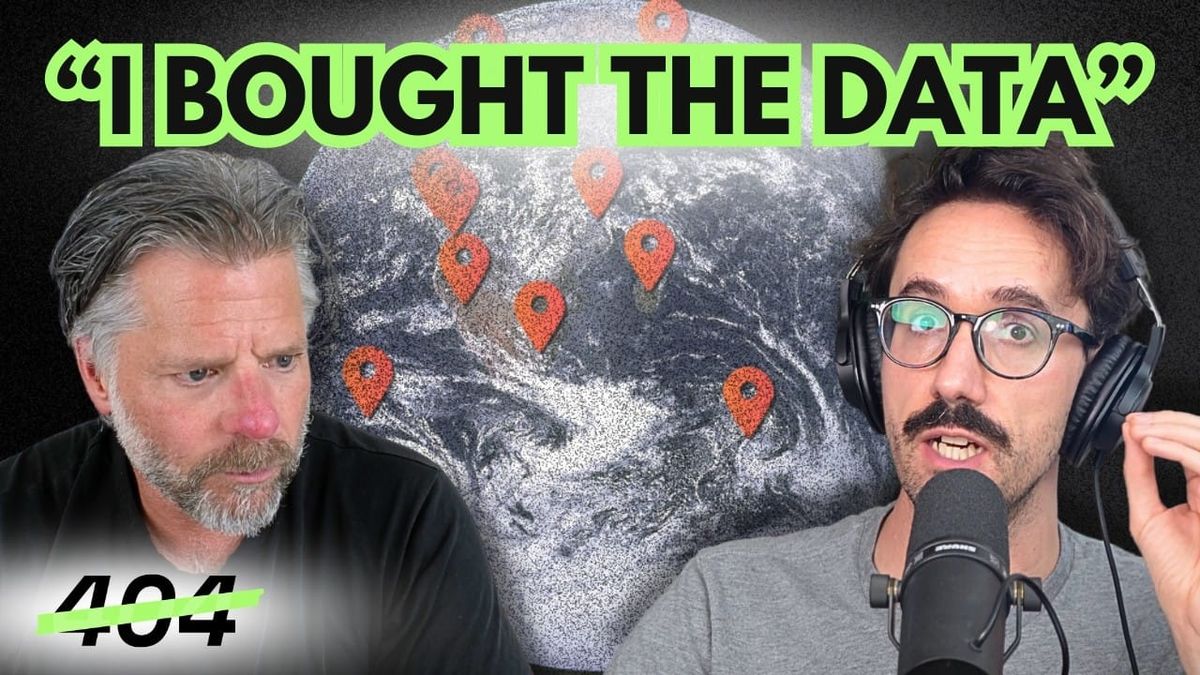
404 Media has released a podcast episode in which reporter Joseph Cox interviews Mike Yeagley about location data bought from commercial markets and shown to parts of the U.S. government. The Mike Yeagley location data discussion centers on a blunt privacy problem: phone movement records can be bought, analyzed and demonstrated without the person carrying the phone being part of that transaction.
According to 404 Media’s episode description, Yeagley spent hundreds of thousands of dollars acquiring phone location data from around the world. Cox says Yeagley introduced some government users to the idea that commercially available location data could be used as an intelligence tool, then showed what could be done with it.
The episode is part of The 404 Media Podcast and was published July 27, 2026. It is available through 404 Media’s site, Spotify, Apple Podcasts and YouTube, according to the publication’s listing.
Who is Mike Yeagley?
404 Media describes Mike Yeagley as someone who bought large amounts of commercially sourced location data and demonstrated its uses to parts of the government. The episode summary does not name the government offices involved or specify the vendors from which Yeagley bought the data.
The episode also points listeners to a Wired story titled “How the Pentagon Learned to Use Targeted Ads to Find Its Targets—and Vladimir Putin”. 404 Media’s listing presents that story as related background for the podcast conversation.
What is commercially sourced phone location data?
In the context described by 404 Media, commercially sourced phone location data refers to location information gathered and sold through private-sector markets rather than obtained directly through a traditional government collection program. The privacy concern is mechanical, not mystical: if data about phones’ movements can be purchased, buyers may be able to infer where people live, work, travel or gather.
404 Media’s description does not provide a technical breakdown of the data pipeline, such as which apps, ad systems or brokers supplied the records. It also does not state whether the data was anonymized, how precise it was, or what legal authorities government users relied on when seeing or using demonstrations.
Those omissions matter because “location data” is a broad term. A one-off coarse location signal is different from repeated coordinates tied to a persistent device identifier. The second version can be far more revealing because patterns over time can identify routines and associations, even when a dataset does not display a person’s name.
404 Media frames the interview as a privacy and security story rather than a product demo. The confirmed facts from its public description are narrower: Yeagley bought global phone location data, spent hundreds of thousands of dollars doing so, and showed parts of the government how such data could be used.
This story draws on original reporting from 404 Media.