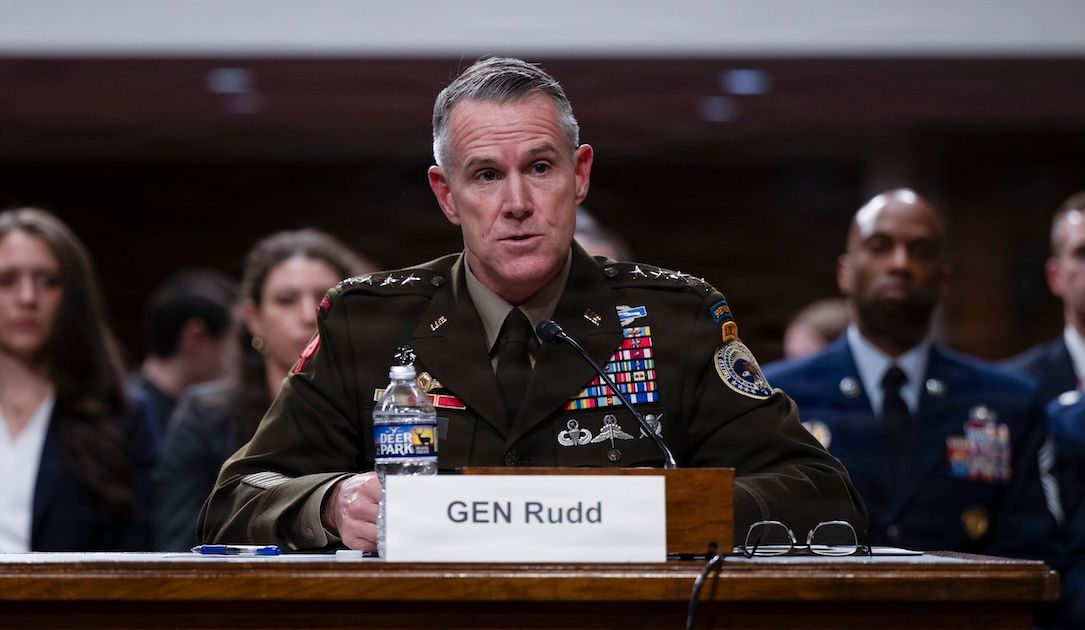
The reported NSA five mission centers plan would replace the agency's existing directorates with organizations focused on China, cybersecurity, artificial intelligence, combat support and global intelligence. The redesign is intended to move intelligence gathered by the NSA to battlefields and military customers faster, according to Recorded Future News, which cited people familiar with the matter.
The National Security Agency has not publicly confirmed the plan. It did not respond to Recorded Future News' request for comment. The Washington Post separately reported that the overhaul, developed by NSA Director Gen. Joshua M. Rudd, would be the agency's most extensive internal restructuring in at least a decade.
Rudd, who also commands U.S. Cyber Command, reportedly told the NSA workforce about the changes earlier this month and started a 30-day implementation period. Each center is expected to have its own chief, or mission director. Reporting indicates the centers are expected to reach full operational capability around January, though the precise date is not settled.
What are the NSA's five mission centers?
The reported structure divides the agency's work into five topic and mission areas:
- China
- Cybersecurity
- Artificial intelligence
- Combat support
- Global intelligence
That list says more about the intended top-level structure than it does about daily operations. The reporting does not establish the centers' budgets, staffing, reporting lines or statutory authorities. It also remains unclear whether they will fully displace today's divisions or be layered over parts of the existing bureaucracy.
Rudd formally assumed both the NSA directorship and command of U.S. Cyber Command on March 20, according to his NSA biography. In a U.S. Cyber Command posture statement, he described NSA as Cyber Command's closest partner and said the dual-hat arrangement lets him make decisions at the speed of war and relevance.
What remains unresolved in the NSA reorganization?
Several consequential details are still unsettled in the reporting. Tailored Access Operations, the NSA's elite hacking group, is expected to sit inside the global intelligence center, according to Recorded Future News. The eventual placement of the Cybersecurity Collaboration Center and other newer NSA organizations has not been reported.
The impact on the relationship between NSA and Cyber Command is also unclear. The two organizations share resources and a campus at Fort Meade, Maryland, but they have distinct responsibilities. NSA is an intelligence-community component, a combat support agency and overseer of vital national-security systems, while Cyber Command conducts military cyber operations.
People familiar with the change told Recorded Future News that Rudd and NSA Deputy Director Tim Kosiba expected the rapid shift to disrupt parts of the institution and require adjustment. Whether the new arrangement speeds the agency's work or adds another management layer depends on organizational details that remain unresolved in the reporting.
The agency has been here before. Its NSA21 restructuring about a decade ago sought to combine offensive and defensive organizations. Current and former officials told Recorded Future News that they viewed that effort as a failure that introduced further bureaucratic confusion, a history that puts unusual weight on the unanswered questions in this redesign.
This story draws on original reporting from The Record.