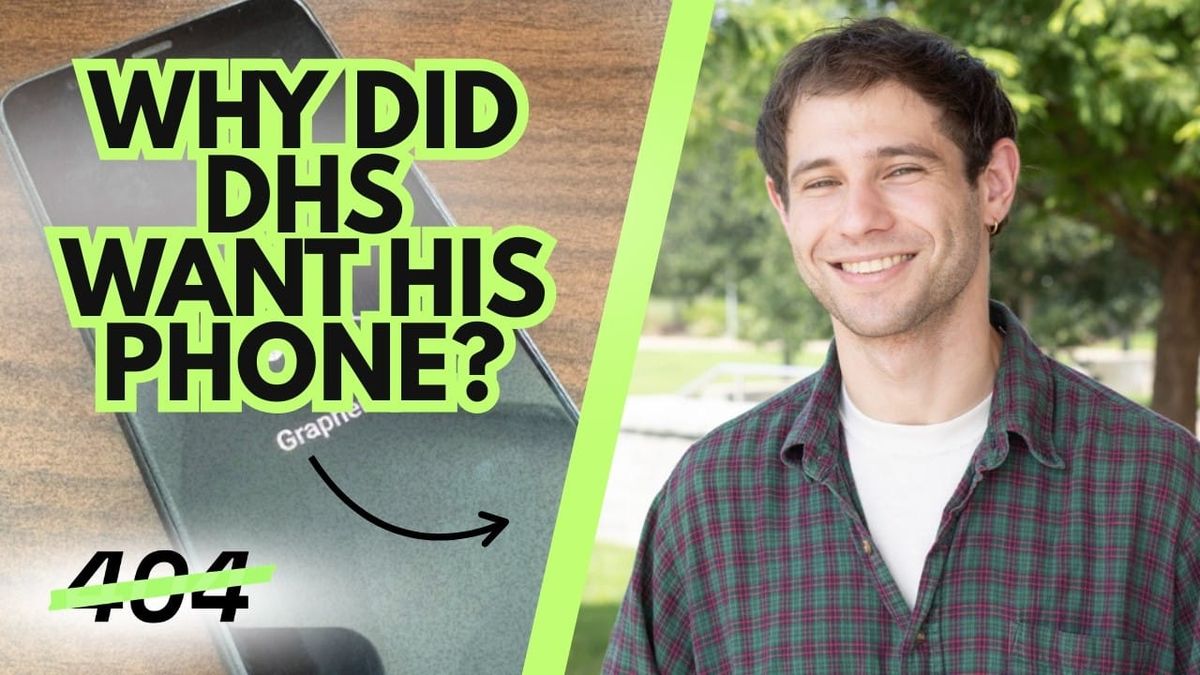
The Samuel Tunick phone wipe case is the lead item in a 404 Media Podcast episode released August 5, 2026. The episode examines prosecutors’ allegation that Tunick gave border officials a passcode during an airport inspection that erased his GrapheneOS phone before they could examine its contents.
Tunick has been charged, not convicted. Reporting cited by the podcast and by MS NOW characterizes the allegation as a federal felony involving destruction or removal of property to prevent seizure, with a reported maximum penalty of five years in prison. The research available does not include a charging document or a court ruling, so the precise statute and the government’s full case cannot be independently assessed here.
What happened in Samuel Tunick’s phone wipe case?
According to the podcast’s account of statements by Tunick’s lawyer, Tunick was returning to the United States from the Dominican Republic in January 2025 when he was stopped at an airport. The lawyer said the Department of Homeland Security had alerted airport officials in advance and wanted them to stop Tunick and obtain his phone.
The podcast reports that officials searched Tunick’s bags and person after he declined consent, then sought his phone passcode. He initially refused, according to the account, but later supplied a code. Rather than opening the device, the code allegedly produced a blank screen followed by the GrapheneOS logo and returned the phone to factory state.
That alleged sequence is central to the charge. The New York Times’ search excerpt similarly says prosecutors brought an obstruction case after a returning traveler supplied a passcode that erased his smartphone.
How did the reported duress code work?
A duress passcode, as described in the 404 Media episode, is a code configured to erase a device rather than unlock it. In Tunick’s reported case, the phone wipe removed the contents that officials had sought to inspect and reset the device. The reporting identifies the operating system as GrapheneOS, but does not establish the configuration of Tunick’s particular phone beyond the lawyer’s account.
Tunick’s lawyer has alleged that the government targeted him for his activism against Atlanta’s proposed police training center, commonly called Cop City; that officials denied requests to speak with counsel; and that they had no warrant to search the phone. Those are the lawyer’s assertions, not findings established by the supplied reporting. The podcast also says authorities had not identified specific evidence they expected to find on the phone, again based substantially on the lawyer’s account.
The 49-minute episode is available through 404 Media’s player and on YouTube; 404 Media also lists Apple Podcasts and Spotify. Its other public segment covers an AI-driven TikTok Shop operation. A subscriber-only section discusses a Google Earth AI feature.
This story draws on original reporting from 404 Media.