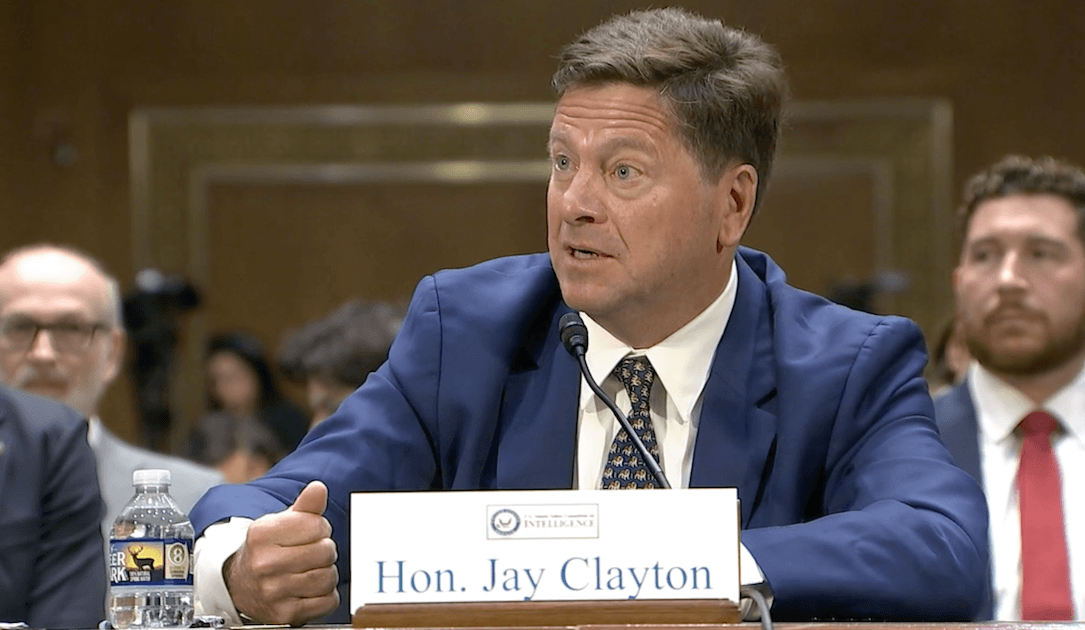
The Senate Intelligence Committee voted Tuesday to advance Jay Clayton, President Donald Trump’s nominee for director of national intelligence, sending the nomination to the full Senate after a party-line 9-8 vote.
The decision moves Clayton one step closer to taking over the Office of the Director of National Intelligence, the post that coordinates the country’s intelligence agencies and briefs the president on national security threats. A full Senate vote could come before lawmakers leave Washington for their August recess.
Sen. Tom Cotton of Arkansas, the Republican chairman of the committee, backed Clayton after last week’s confirmation hearing. “Jay Clayton is a highly qualified nominee with a deep experience combatting a wide range of national security threats,” Cotton said.
Clayton previously led the Securities and Exchange Commission during Trump’s first administration. His nomination drew sharp questions from Democrats on the intelligence panel, who pressed him on whether he would keep the intelligence job out of Trump’s political fights.
One flashpoint was the 2020 election. At the hearing, Democratic senators repeatedly asked Clayton about Trump’s loss to Joe Biden. Clayton would not say Biden defeated Trump, saying instead that the result was “certified.” That answer did little to calm Democrats who argue the DNI job depends on giving presidents unwelcome facts, not useful fog.
Clayton also faced questions about former Director of National Intelligence Tulsi Gabbard’s visit to a Georgia election office earlier this year while the FBI was conducting a search tied to the 2020 election. The hearing grew tense, but it did not seriously change expectations that Republicans on the committee would move his nomination forward.
The timing put Clayton in the middle of Trump’s latest public claims about election interference. His hearing came one day before Trump delivered a nationally televised address accusing foreign governments, especially China, of efforts to interfere in U.S. elections going back to the race he lost.
The White House released newly declassified documents that it said supported Trump’s long-running claims. The administration, however, has not publicly produced hard evidence that foreign actors penetrated voting machines or changed vote totals. Clayton testified that he had no role in preparing Trump’s speech.
Clayton’s confirmation could also affect a stalled surveillance fight on Capitol Hill. Lawmakers have been considering legislation to renew Section 702 of the Foreign Intelligence Surveillance Act, a surveillance authority used by the National Security Agency to collect foreign intelligence from communications such as international calls and emails involving foreign targets overseas.
The program can also capture Americans’ communications when they interact with those targets, which is why the fight over Section 702 tends to turn into a brawl over warrants, privacy and intelligence access. The statute expired last month after Democrats said they would not support renewal while acting intelligence director Bill Pulte remained in the role. Pulte is a former housing official with no known intelligence experience.
If the Senate confirms Clayton, the administration may have a less vulnerable face for that debate. Whether Democrats treat that as enough to restart Section 702 talks is the next test.
This story draws on original reporting from The Record.