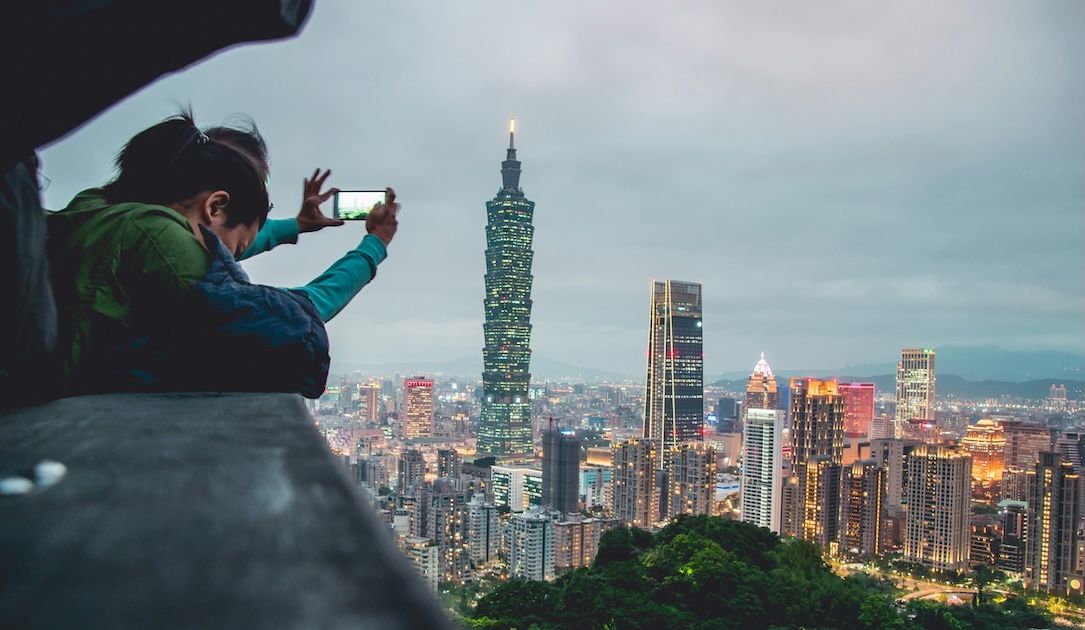
Taiwanese officials plan to slow mobile internet service across much of the island during civil defense exercises in August, a controlled annoyance meant to test how residents communicate when cellular data stops being dependable.
The National Communications Commission said Monday that 4G and 5G data will be throttled for 30 minutes in 14 cities and counties in northern and central Taiwan during the Urban Resilience Exercises. Those drills will run alongside Han Kuang, Taiwan’s annual military exercise.
Local media, citing government planning documents, reported that mobile data speeds will be reduced to about 1% of normal capacity. That is enough to break the habits people tend to reach for first: video streams, video calls, social feeds and large downloads are expected to become largely unusable during the test.
Officials described the measure as a throttling test rather than an internet shutdown. Voice calls, SMS messages, emergency alerts and calls to emergency services are supposed to keep working. Fixed broadband, WiFi, landline phones, military communications and other dedicated networks will also remain in normal operation, according to the authorities.
What residents are being told to do
Officials cited by Reuters and Bloomberg said at a Taipei briefing that the point is to force people to try other channels before a real crisis does it for them. That means using WiFi where it is available, keeping offline maps on devices and agreeing in advance how family members will contact one another if mobile data becomes unreliable.
That is a basic resilience drill, dressed in telecom plumbing. Modern phones can still place calls and receive alerts when packet data is degraded, but many everyday communications tools rely on mobile broadband. A person who can call an emergency number may still be unable to join a video meeting, pull up a cloud-stored document or message relatives through an app that assumes a healthy data connection.
The communications test is one piece of the wider Urban Resilience Exercises. Authorities also plan to rehearse civilian evacuations, increase emergency medical capacity and test drones for moving supplies and medical equipment, according to the reports.
Taiwan’s defense ministry said the drill will help officials decide whether similar exercises should be extended to other parts of the island. The government is testing the public side of a problem militaries have long planned for: communications networks are useful until a typhoon, earthquake, cable fault, cyberattack or missile strike makes them less useful.
Why telecom failure is part of the scenario
Taiwan has been putting more attention on resilience as it prepares for natural disasters and the possibility of military conflict. Reuters has reported on concern over Chinese vessel activity near Pacific supply routes, and Taiwan has dealt with several undersea communications cable disruptions in recent years.
The August drill will not show how Taiwan’s networks would perform under attack. A scheduled 30-minute throttle is a clean test, with known boundaries and backup systems left intact. It will show something narrower and still useful: whether residents notice the difference between having a signal and having a usable data connection, and whether their fallback plans exist outside a government slide deck.
This story draws on original reporting from The Record.