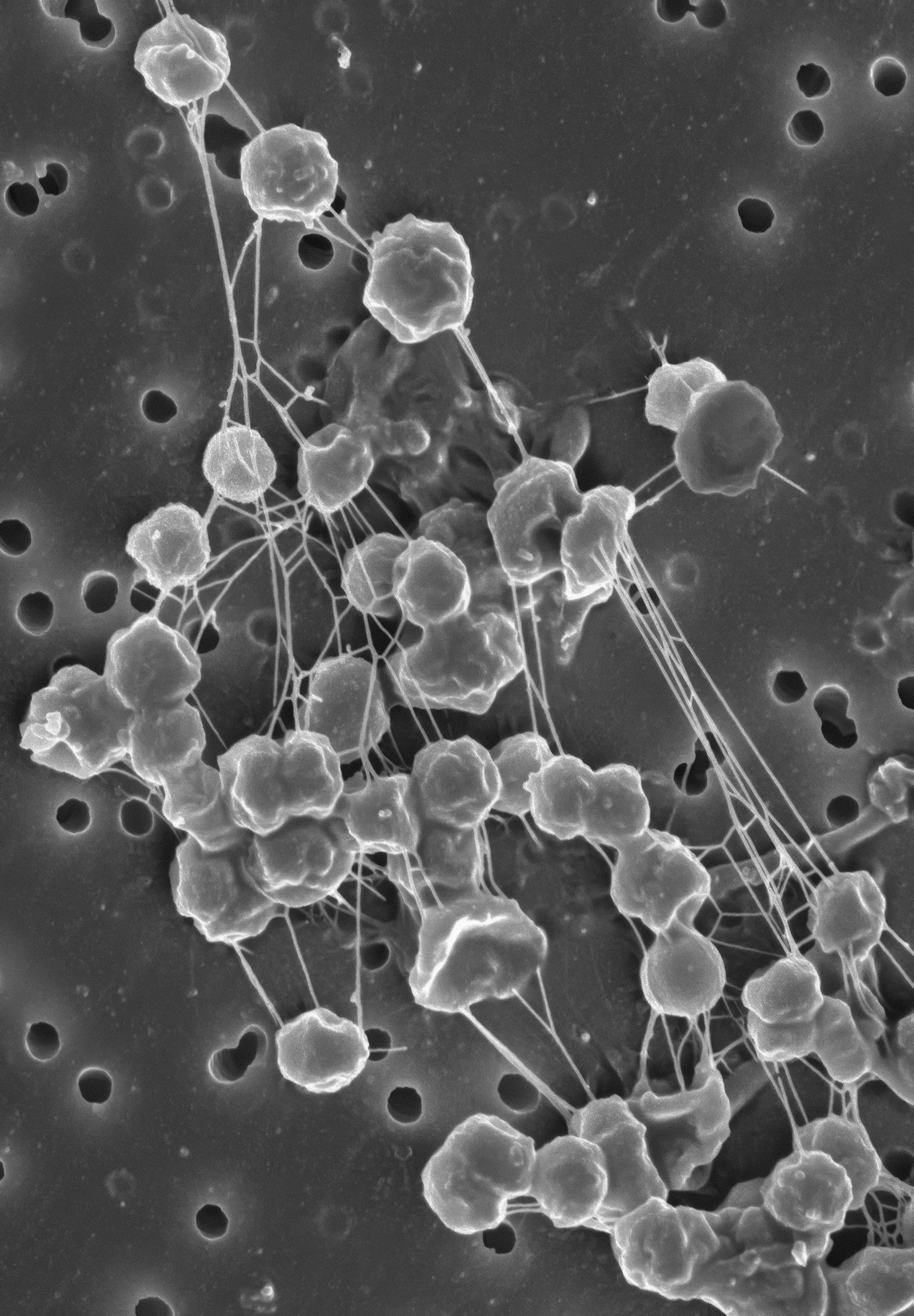
The “virtual alien lifeform model” is not a simulated space creature, and it has not found life beyond Earth. Arwen E. Nicholson and Nathan J. Mayne of the University of Exeter built a generalized computer model of a methane-producing microbial cell, then used it to test how variations in that biology could change a planet’s atmosphere.
Their paper, “A generalized microbial cell model for methane biosignature predictions”, was accepted July 7 and published in advance access July 10 in Monthly Notices of the Royal Astronomical Society. The point is to give researchers a less Earth-bound way to interpret possible atmospheric signs of life on exoplanets.
A biosignature is a measurable feature, such as a gas in an atmosphere, that may be associated with biological activity. It is not proof of life by itself. The Exeter model is designed to test how biology could alter atmospheric chemistry alongside models of non-biological, or abiotic, processes.
How does the virtual alien lifeform model work?
The researchers modeled a single-species ocean biosphere made up of methane-producing, chemosynthetic microbes. Chemosynthetic organisms draw energy from chemical reactions rather than sunlight. In the model, a cell’s metabolic rate depends on thermodynamics and on how substrates diffuse through its cell wall.
Nicholson and Mayne changed three biological inputs: cell size, cell death rate, and the energy cost of making biomass. They then examined the resulting effect on methane, the model’s biosignature gas. The published work says metabolism can transform gases produced without life, potentially removing or changing atmospheric features that an abiotic model alone might predict.
That matters because potentially habitable planets need not resemble Earth in size, mass, rotation, or the spectrum of their host stars. The paper describes Hycean planets as a proposed class of worlds with global oceans and hydrogen-rich atmospheres that are considered potentially habitable. Such worlds are a useful motivation for general models, not evidence that they contain life.
What can methane tell scientists about alien life?
Methane can be an output of microbial metabolism, so its atmospheric abundance may help form a biosignature prediction. But the study does not treat methane as a standalone verdict. Its authors argue that any prediction for a particular exoplanet would require a dedicated model accounting for factors including the planet’s size, mass, and host star.
The scope is deliberately narrow. The abiotic environment is a simplified early-Earth testing ground, while the biology is limited to chemosynthetic microbes. The model assumes that life uses chemical-potential gradients for energy, that nutrient intake is constrained in part by diffusion, and that organisms compete for resources.
What it does: tests how plausible changes in a generic methane-making microbe could alter a modeled atmospheric signal.
What it does not do: identify an alien species, demonstrate that methane on another world came from life, or predict what extraterrestrial organisms look like.
In an interview with 404 Media, Nicholson said the team intends to extend the approach to simplified photosynthetic cells. She also cautioned that different forms of life could produce similar biosignatures. Even a coherent atmospheric signal, then, would not disclose an organism’s appearance or precise nature.
This story draws on original reporting from 404 Media.