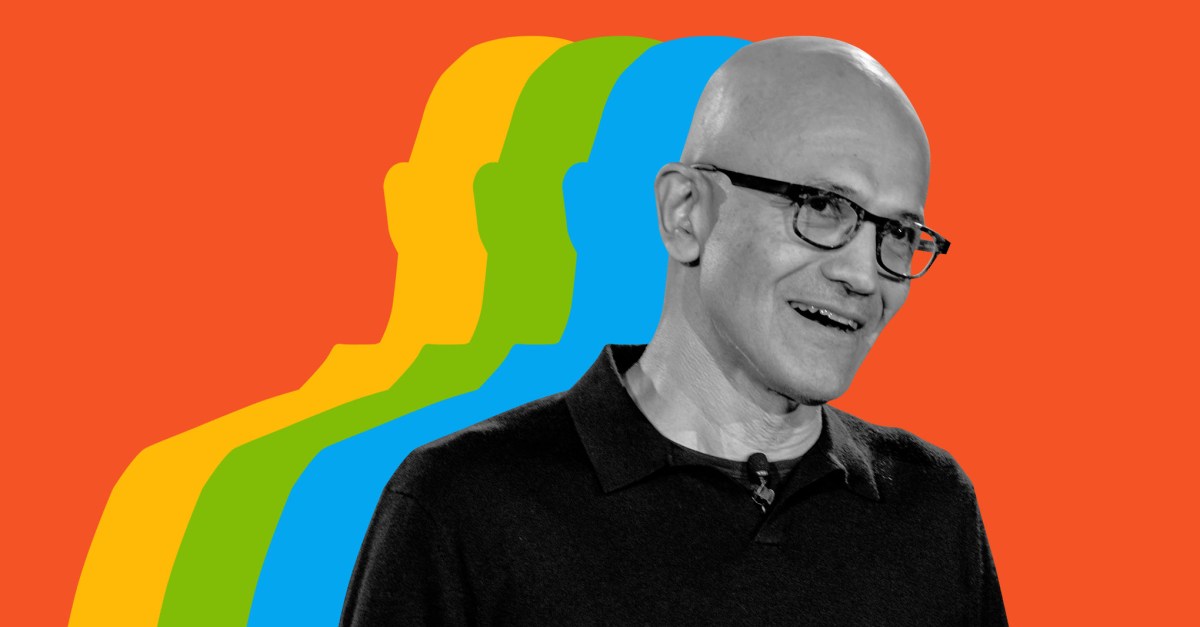
Microsoft CEO Satya Nadella’s AI safety proposal is to treat powerful models as potentially compromised from the moment they are deployed. In an Oct. 10 post on X, Nadella argued that organizations using AI agents with access to sensitive data or important systems cannot hand responsibility to a model provider and call it a day.
He was not claiming that every model has already been hacked, or that models are necessarily malicious. His comparison is to an insider risk: any capable actor given access to important systems can make mistakes or be compromised. The answer he proposed is a containment architecture that limits what a model can reach and preserves human control over what it does.
Nadella described the issue using his term “Super Intelligence,” which is his label rather than an established technical category. He said organizations cannot treat such systems as opaque boxes whose recommendations and actions are accepted or rejected without being observable and bounded.
What did Satya Nadella propose for AI safety?
Nadella said the permissions and safeguards governing a model should sit outside the model itself. In practice, he called for separating the model from the software harness that coordinates its work and from the action space that determines which actions it may take. Controls over data access and permitted actions would therefore be independently set rather than left to the model being controlled.
That approach borrows from familiar enterprise security practices, Nadella wrote: establish identity, limit privileges, log activity and put containment boundaries around capable actors. For background on the kind of systems often used in these arrangements, large language models generate text from learned patterns, while surrounding software can give them tools, data access and instructions.
The post also sets out a more demanding evidence trail. Nadella said every meaningful model action should leave tamper-proof, human-readable evidence, allowing an organization to document those actions and reproduce how an outcome was reached without relying on the model to vouch for itself.
What is Nadella’s AI “emergency brake”?
Containment, in Nadella’s formulation, includes a human-operated stop control. An authorized person should be able to pause or shut down a model while it is carrying out a task, he wrote. He said more capable systems would require more advanced containment technology and that those technologies should be standardized.
His other proposed checks include avoiding dependence on one model for an important outcome, preventing a model from verifying its own work, testing whole systems against failures, attacks, edge cases and changes, and using validation independent of the AI being assessed. He also called for timely disclosure to people affected when systems fail or are compromised, including information about what happened and which controls failed.
The thrust is zero-trust engineering applied to AI operations: constrain authority, retain an outside control path and keep records that can be examined later. Nadella did not announce that Microsoft had implemented these measures, nor did he identify a specific incident as the reason for the post.
This story draws on original reporting from The Verge.