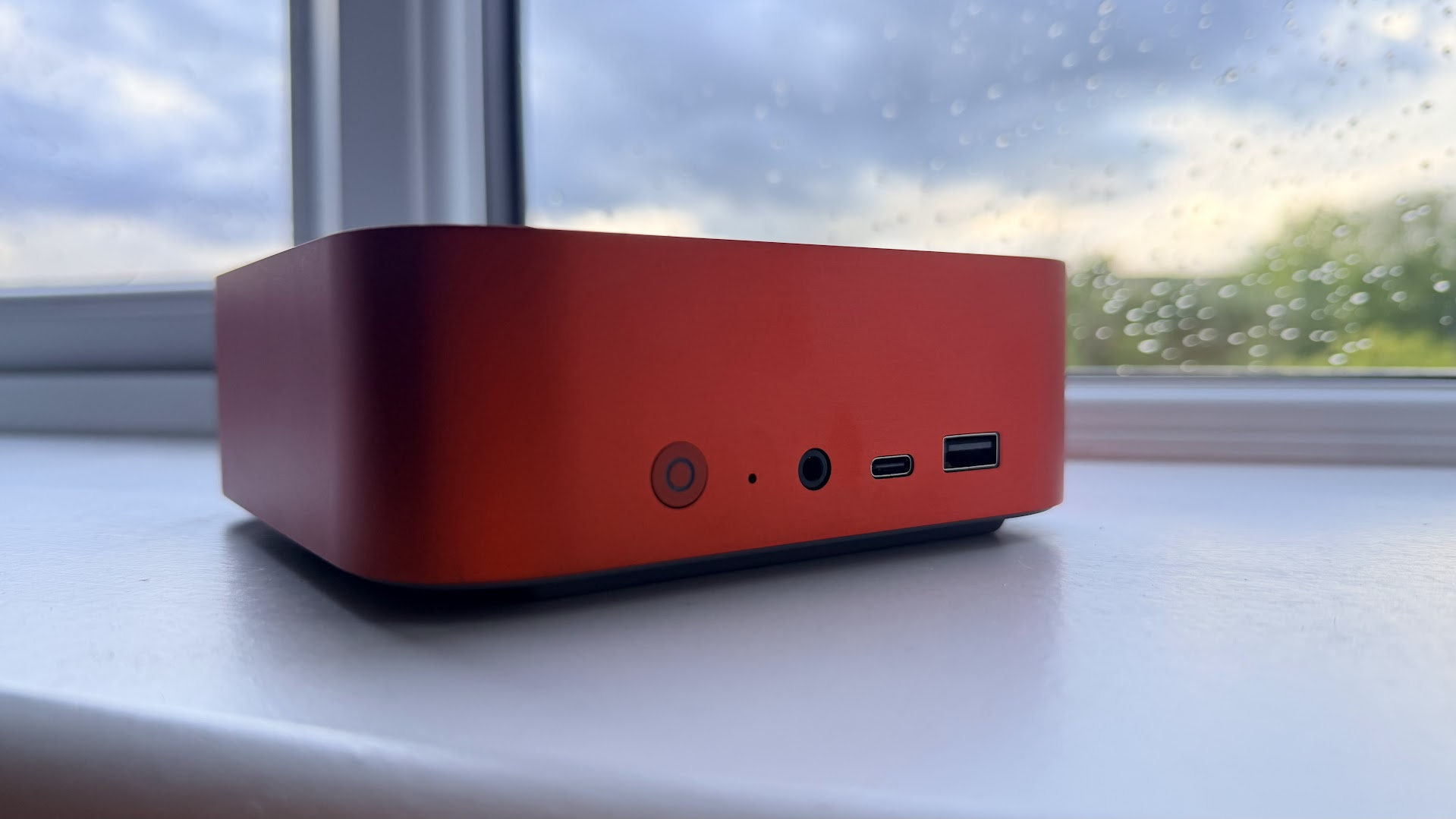
This Beelink SER10 Max review finds a mini PC with an unusually practical split personality: the tested $1,649 configuration boots both Windows 11 and Ubuntu from separate 1TB SSDs. On the Ubuntu drive, Beelink includes OpenClaw and the Qwen 3.5-9B-Q4_K_M local model. It is a more ready-made setup than the usual mini-PC ritual of installing an operating system, drivers and model tools yourself. It is also a pricey machine whose processor refresh does not rewrite the performance hierarchy.
The SER10 Max uses AMD’s Ryzen AI 9 HX 470, formerly code-named Gorgon Point. AMD lists four Zen 5 cores and eight Zen 5c cores, for 12 cores and 24 threads, along with Radeon 890M integrated graphics and up to 55 NPU TOPS. AMD also lists Windows 11 and Ubuntu among supported operating systems, though that does not mean every vendor configuration ships with both.
Which SER10 Max models include Ubuntu and OpenClaw?
Buyers need to read the SKU, not the marketing thumbnail. Tom’s Hardware’s 64GB, 2TB review machine used two Crucial 1TB drives, one per operating system, and carried the $1,649 configured price. Beelink’s product page identifies an OpenClaw and local-LLM-preinstalled variant.
But Robtech tested a different 32GB, 1TB loan unit that arrived with Windows 11 only and no preinstalled apps. That reviewer installed the current Ubuntu release successfully. The distinction does not invalidate the dual-boot version. It does mean included software, memory, storage and price vary by configuration. Robtech reported a $1,259 price at the time for its 32GB/1TB model.
What does the HX 470 add over the HX 370?
Not much, at least in the tested workloads. ETA Prime measured the HX 470 about 6% faster in Geekbench 6 single-core and 7.39% faster in multi-core testing than an HX 370 system, both at 54W. Its Cinebench R24 gains were about 5% and 5.5%. Robtech likewise found small, workload-dependent gains, including an at-best roughly 2% lead in one 3DMark comparison. This is a clock-speed tidy-up, not a new class of mini PC.
The trade-off is more interesting than the CPU bump. The reviewed dual-boot system has two replaceable DDR5-5600 SODIMMs. That is preferable to soldered memory when a machine needs more RAM or a repair, but the reviewers say the slower memory can hold back integrated-graphics results. Tom’s Hardware also cites 89.6 GB/s maximum memory bandwidth for the HX 470, versus 256 GB/s for Strix Halo, and warns that this constrains local-AI work. RAM and storage do different jobs, and here the relevant question is memory speed as well as capacity.
Can the Beelink SER10 Max be upgraded?
Yes, after a mildly irritating entrance exam. The underside’s rubber feet are glued over four screws; removing the bottom and then a dust filter exposes the internals. Tom’s Hardware found accessible SODIMM slots, two M.2 2280 SSD slots and an M.2 2230 slot holding the Intel Wi-Fi 6 and Bluetooth 5.2 card. This is serviceable hardware, not tool-free hardware.
Other hardware is well aimed at a compact workstation: USB4, HDMI 2.1, DisplayPort 1.4 and 10GbE Ethernet. Tom’s Hardware says it supports power-on through LAN and that USB4 could connect an external GPU. The chassis uses a machined-aluminum upper shell, vapor-chamber cooling and one fan that the publication said did not become excessively loud under heavy load. The power supply remains external.
For gaming, Robtech found Radeon 890M suitable for many esports and older games, while newer AAA titles were a poor fit at 1080p on native low settings. An eGPU can improve graphics capability, but Robtech reported a performance cost from the 40Gbps USB4 connection. The dual-boot model and replaceable parts make the SER10 Max distinctive; the modest HX 470 uplift and DDR5-5600 bandwidth ceiling make it a specialized premium purchase, not a blanket local-AI or modern-gaming recommendation.
This story draws on original reporting from Tom's Hardware.