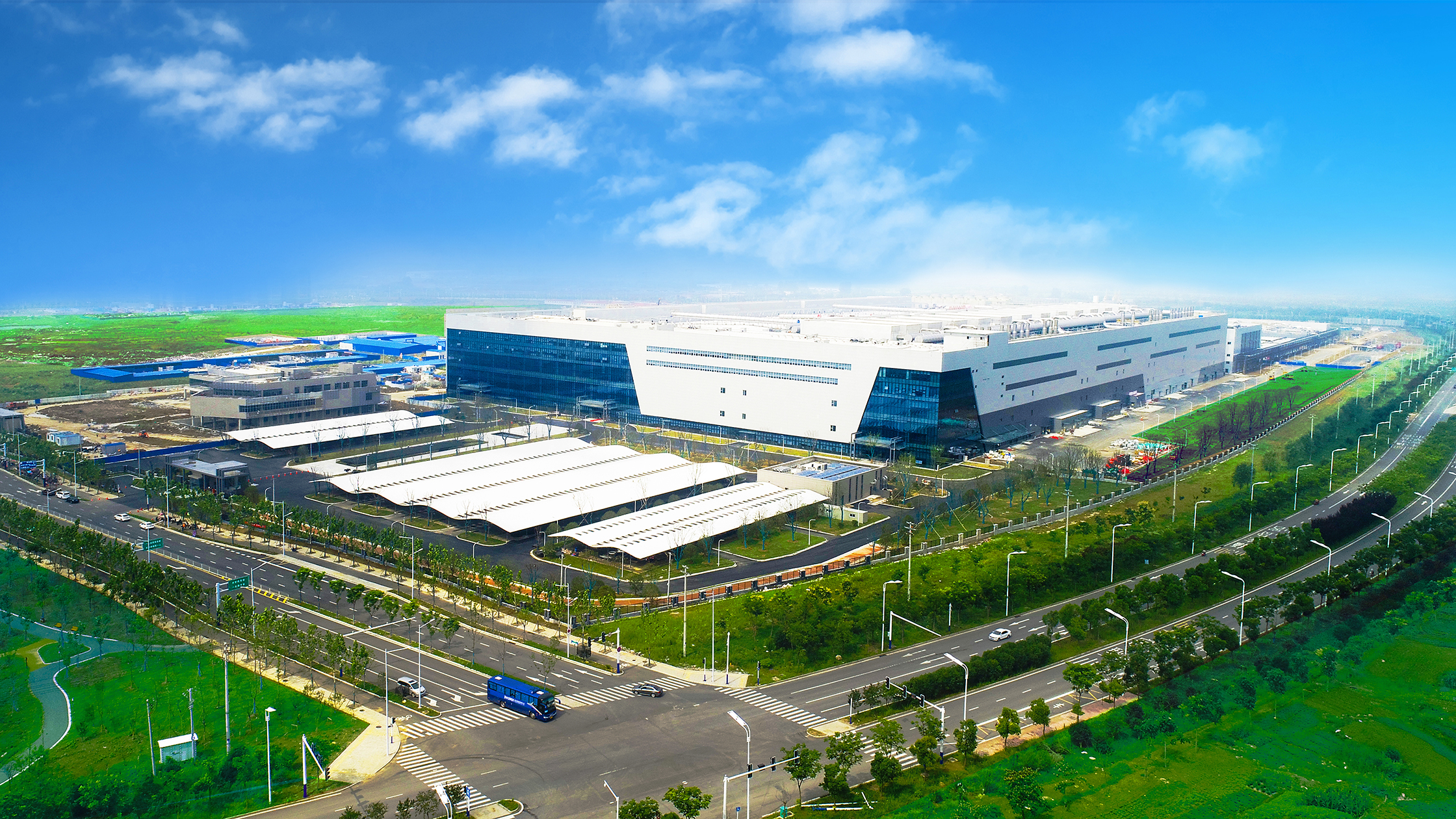
CXMT sixth DRAM fab plans are still at the consideration stage, not a done deal. ChangXin Memory Technologies is reportedly examining a new plant in Beijing’s Yizhuang district beside its existing facility, while pursuing other expansion projects near Shanghai and Hefei, according to Reuters reporting summarized by Tom’s Hardware.
That distinction matters because the company’s growth story has acquired a tidier headline than the evidence supports. The proposed Beijing plant has no disclosed production capacity or capital budget, and discussions over its financing remain preliminary, Tom’s Hardware reported. It is not yet an approved, funded or operating fab.
CXMT currently runs three 300-mm DRAM fabs, two near Hefei and one in Yizhuang, according to the report. If its reported projects all enter service, total output capacity could exceed 600,000 wafer starts a month. That is a reported potential capacity figure, not a completion schedule or a guarantee that the plants will reach it.
Is China’s 30% DRAM share by 2030 a CXMT target?
No. The 30% figure is investment manager Dan Niles’s view that China could reach that share of the global DRAM market by 2030. It is not disclosed CXMT guidance, and it does not say CXMT alone would hold 30%.
The current baseline is substantially smaller. Counterpoint Research estimated that CXMT held roughly 8% of worldwide DRAM shipments in 2025 and about 9% in the first quarter of 2026, ABC News reported. Counterpoint’s forecast put the company at about 11% in 2028. Those figures describe shipment share, not revenue, manufacturing capacity or a prediction that the company will meet any particular long-term threshold.
DRAM, or dynamic random-access memory, is the fast working memory used by systems ranging from AI servers and cars to phones and PCs. It holds data and instructions in active use, rather than preserving files after power is off. For the less marketing-scented version of that distinction, see how computer memory differs from storage.
Why chipmaking tools could limit CXMT’s expansion
Buildings and capital are only part of a memory-fab expansion. Manufacturing also depends on equipment that can repeatedly produce chips at the required scale. ABC News reported that U.S.-led restrictions sharply limit China’s access to the most advanced chipmaking machinery, pushing CXMT toward greater reliance on domestic equipment suppliers.
Counterpoint research director MS Hwang described tool trade restrictions as CXMT’s key challenge, according to ABC News. The constraint does not establish that the Beijing project will fail. It does mean the company’s reported factory buildout, and any attempt to convert wafer capacity into durable global DRAM share, depends on more than construction announcements.
The expansion arrives as AI demand has increased pressure on memory supply and as China seeks greater semiconductor self-sufficiency. CXMT’s large Shanghai listing raised at least $8.6 billion, ABC News reported, giving it capital for an expensive business. The harder part is turning that capital into working output while access to leading manufacturing tools remains restricted.
This story draws on original reporting from Tom's Hardware.