Nokia did not miss the smartphone shift because its executives were asleep. Internal Nokia material now public through Aalto University’s Nokia Design Archive shows the Finnish phone maker held a rapid-response meeting on 10 January 2007, one day after Steve Jobs introduced the iPhone at Macworld in San Francisco.
The slide deck’s conclusion was blunt: Apple’s device was “a serious high-end contender.” It also said Nokia, long proud of its user interface work, needed a touch interface to respond. That is the maddening part of Nokia’s fall. The company saw the problem early, understood the technical direction, and still could not ship the right product fast enough.
By then, Nokia was not some fragile incumbent. In 2005, it sold its billionth mobile phone, a low-cost handset bought by a customer in Nigeria. The Espoo-based company was producing roughly one in three mobile phones sold worldwide. Less than a decade later, it sold its handset business to Microsoft at a fraction of its former value.
The empire was built on phones that did the job
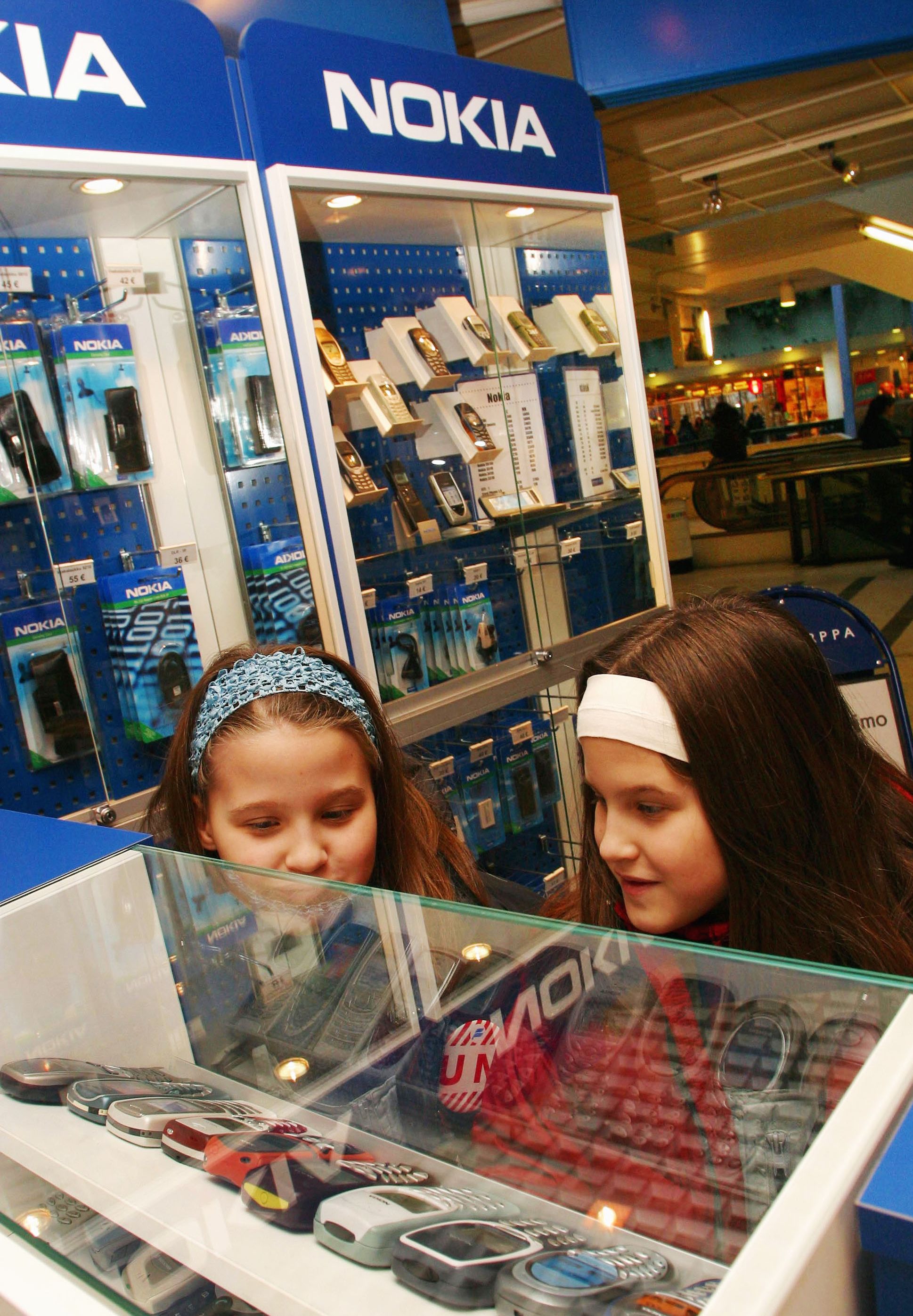
Nokia’s dominance came from devices that treated durability, battery life and price as features, not afterthoughts. The 3210 and 3310, released in 1999 and 2000, sold more than 280 million units, according to the Mobile Phone Museum. Their internal antenna removed the little plastic aerial that had been part of the mental model of a mobile phone.
The phones also helped turn texting, ringtones and mobile games into mass habits. Nokia’s handsets shipped with Snake, supported SMS and later Nokia smart messaging for small bitmap images, and gave users a Composer app for making custom ringtones.
The 1100, released in 2003, pushed the formula further down-market. Nokia sold about 500 million of them, making it the best-selling cellphone in history, according to published sales lists cited by the Mobile Phone Museum and other records. It cost around $100, had dust resistance, grippy sides, a long standby battery life and a flashlight activated from the keypad. That was good engineering for places with rain, dust and unreliable electricity.
The touchscreen response came late
Former Nokia strategic foresight manager Peter Bryer said Jobs’s announcement was not a total surprise, but the iPhone’s reliance on multitouch was. Multitouch matters because the screen can track more than one finger at a time, allowing gestures such as pinch-to-zoom rather than stylus poking or keypad-driven menus.
Nokia knew the technology. Bryer recalled that Nokia and Microsoft were among sponsors connected to researcher Jeff Han’s 2006 TED demonstration of multitouch. Bryer said Nokia’s Finnish context shaped some skepticism: executives spent much of the year wearing gloves, and button-driven phones worked in the cold.
Timo Partanen, then Nokia’s director of market and competitor analysis, said the company assumed it could answer Apple if the iPhone succeeded. Nokia’s first touchscreen answer, the 5800 XpressMusic, arrived in 2008. Partanen said it was delayed repeatedly and shipped as a reduced version of the original plan. It sold around 8 million units in its first year, but it ran S60 on Symbian and lacked multitouch. Nokia’s first multitouch phone did not arrive until 2010.
Android attacked Nokia’s safest ground
Apple was the obvious high-end threat. Android became the more damaging one for Nokia’s volume business, according to Bryer. The first Android handset, HTC’s Dream, also sold as the T-Mobile G1, went on sale in 2008. Within a few years, Android phones were reaching the lower-cost global markets where Nokia had been strongest.
Nokia still understood those users. A 2006 internal study of rural Uganda described village phone operators, shared phones and the need to show call time precisely because kiosk operators sold calls by the minute. The Nokia 1200, successor to the 1100, included call-time tracking and a multiuser phone book for precisely that sort of use.
The 5230, released in 2009, showed the bind. It was a cheap touchscreen phone and sold about 150 million units, especially in developing markets. But it lacked Wi-Fi, a compromise that made some sense where Wi-Fi was scarce and made less sense elsewhere. Reviewers complained, and Nokia was stuck between its rugged-feature-phone past and a smartphone market moving faster than Symbian-era execution could handle.
Nokia’s lesson is not that incumbents fail because they cannot see the future. Sometimes they can see it on a slide the next morning. Then the shipping schedule, the operating system, the product assumptions and the old profit machine do the rest.
This story draws on original reporting from IEEE Spectrum.