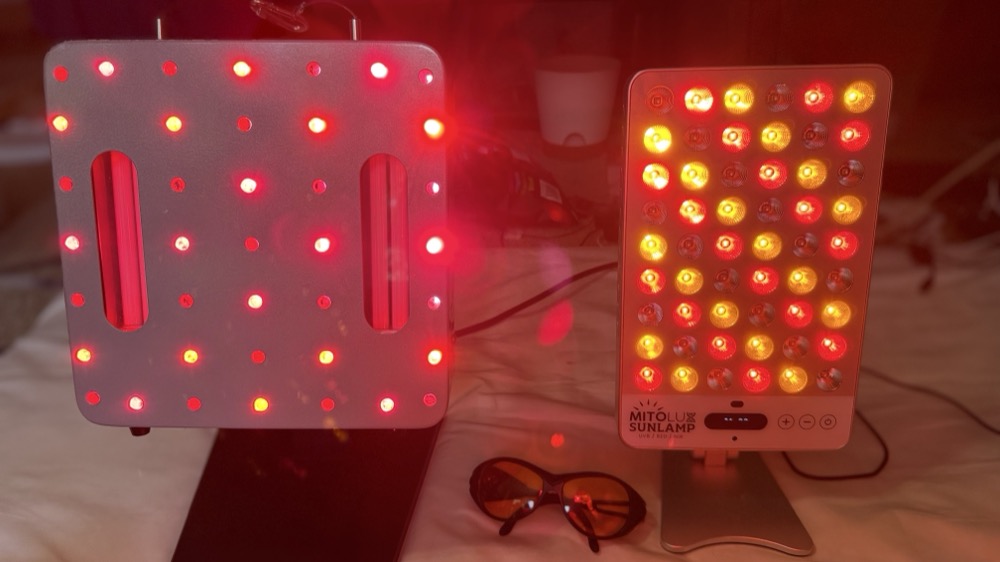
Outliyr has launched a public database that compares light therapy device claims with instrument readings taken under a published protocol. The early numbers are messy in the way consumer hardware benchmarks often are: one tested full-spectrum lamp measured at nearly three times its advertised irradiance, while one red and near-infrared panel produced as little as 67 percent of its listed figure.
The database catalogs more than 70 light therapy devices, mostly red and near-infrared panels and wearables. Outliyr has so far published hands-on measurements for seven of them, with more devices in testing. That is a small sample, but it points at a real problem in this category. Buyers are often asked to compare products using irradiance, a measure of delivered light power, while relying on numbers supplied by the brands selling the hardware.
Outliyr’s tests put measured irradiance, peak wavelengths, electromagnetic field readings, flicker behavior and price next to manufacturer claims. The company takes readings at the same 12-inch distance used in the manufacturers’ advertised figures, which makes the comparison harder to wave away as a setup mismatch.
The measurement stack is the part worth reading past the marketing for. Outliyr says it uses a Hopoocolor OHSP350IR spectroradiometer for irradiance and spectral output, a Hopoocolor HPCS330P flicker analyzer, a Cornet ED88T Plus EMF meter, a Satic Shield EMI meter for dirty electricity in Graham-Stetzer units and a wall-power meter for electrical efficiency. Its testing lab is described as a registry of 20 calibrated instruments across 10 measurement domains, including a thermal imaging camera for heat distribution and a digital oscilloscope for power-supply behavior.
The protocol also tries to avoid the common flashlight-at-the-center trick. Each panel is warmed up for 15 minutes in a blackout environment, then measured at five points in a cross pattern: center, top, bottom, left and right. Tested devices are scheduled for remeasurement every six to 12 months, according to the company.
Nick Urban, Outliyr’s founder, said brands compete on irradiance while giving shoppers little way to verify it. He said he bought a $2,000 spectrometer and began testing panels himself because some devices missed their advertised numbers and some exceeded them.
The company is also attaching an Outliyr Verified record to devices it has tested hands-on, described as a public, code-verifiable ledger of measured data. The broader red light therapy device comparison database is free to browse.
None of this makes seven tests a final verdict on an entire product category. It does show how quickly spec-sheet certainty can fall apart when the same devices meet the same distance, warmup period, sampling pattern and measurement tools. In a market where a few hundred to several thousand dollars can ride on a single irradiance number, that is the benchmark buyers should have been getting already.