The EU AI Act transparency rules began applying on 2 August 2026, requiring companies behind certain chatbots and generative AI services to make their systems and outputs identifiable. The rules, in Article 50 of the AI Act, are aimed at covered uses where people could mistake an automated interaction or synthetic material for the human-made version.
The practical split is between providers, which build and place AI systems on the market, and deployers, which use those systems professionally. The European Commission says the obligations concern defined actors and uses. This is not a blanket demand for a visible warning on every item that has brushed against an AI tool.
What do the EU AI Act transparency rules require?
Providers of systems intended to interact directly with people must tell users that they are dealing with AI, unless that is already obvious. That includes the sort of conversational systems explained in how LLMs work, when they are designed for direct interaction rather than operating invisibly in a back-office process.
Providers of generative systems must also make generated or manipulated audio, images, video and text detectable through machine-readable marking. The Commission says the technical measures must be effective, interoperable, robust and reliable as far as technically feasible, taking account of the medium, costs and current technical limits. That is a requirement for technical signals that systems can read, not a promise that every viewer will see the same on-screen badge.
Deployers have separate disclosure duties. They must disclose AI-generated or manipulated deepfake images, audio and video. The rules also cover AI-generated or manipulated text published to inform the public on matters of public interest. Text that has received human review and editorial responsibility is excepted from that latter disclosure requirement, according to Commission guidance summarized by the Guardian.
Are the EU’s AI labels mandatory?
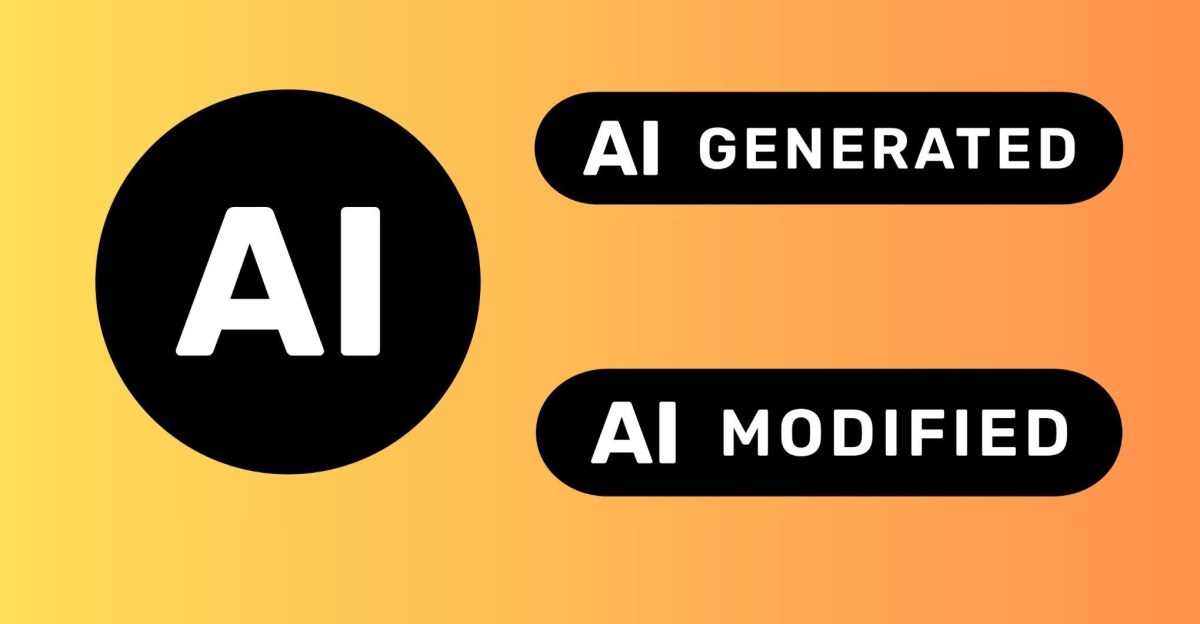
No. The Commission has created icons that companies may use, and its Code of Practice on Transparency of AI-generated Content offers a voluntary route for companies to demonstrate compliance. The legal duties in Article 50 are mandatory; the icons and membership in the code are not.
Commission guidance says code signatories can rely on its measures as evidence of compliance. Companies choosing another route must show their measures are adequate, with market-surveillance authorities assessing those approaches individually. About 190 companies and organisations had joined the code by the end of July, the Commission said.
The obligations apply to new systems placed on the EU market from 2 August. Generative AI systems already on the market before that date have until 2 December 2026 for the specified machine-readable marking requirement. Breaches can bring fines of up to €15 million or 3% of worldwide annual turnover.
The industry is already arguing about scope. The Computer and Communications Industry Association told the Guardian that broad labelling could produce warning fatigue. That is a policy objection, not an exemption: the Commission’s position is that the Article 50 requirements are now law.
This story draws on original reporting from The Verge.