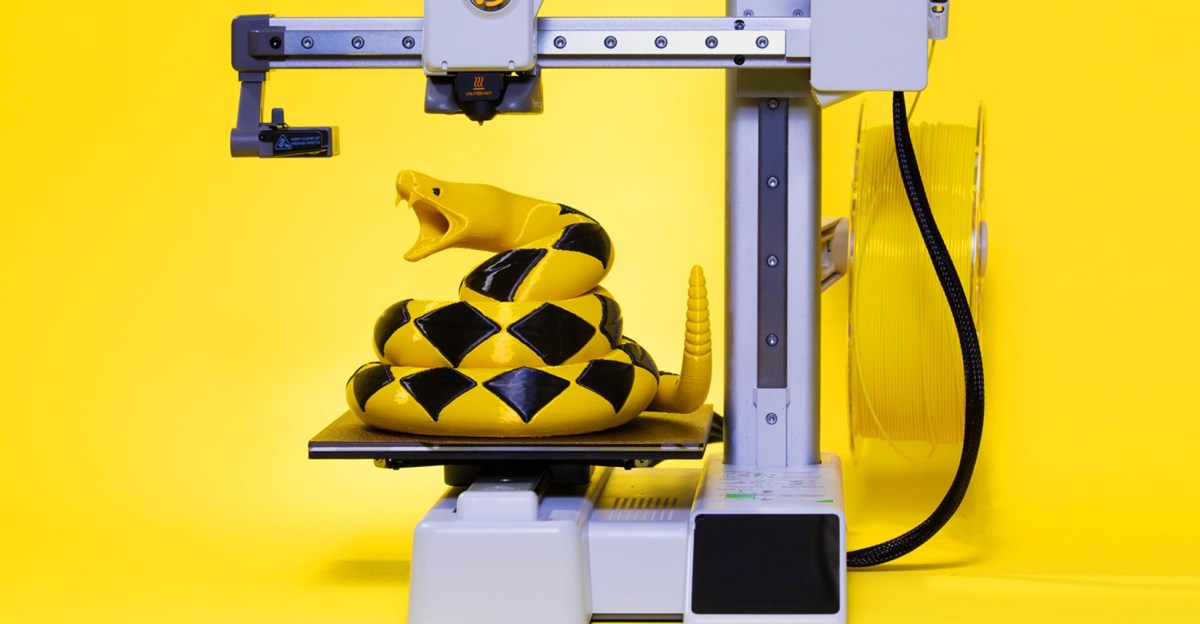
New York and California are moving the ghost-gun fight into the firmware of 3D printers. Gov. Kathy Hochul signed a New York measure in May requiring printers sold in the state to include software that blocks firearm and firearm-component prints. California lawmakers are advancing AB 2047, which would create a state-approved roster of printers equipped with certified blocking technology.
The shift matters because earlier fights over 3D-printed guns mostly targeted files and the sites that hosted them. Courts have often treated gun design code as protected speech, with some exceptions, leaving regulators with laws that are hard to enforce when printing happens at home. The new approach tries to stop the job on the machine before plastic becomes a receiver, suppressor, or conversion device.
The push follows several criminal cases cited by law enforcement and prosecutors. Federal prosecutors allege former Army National Guard member Andrew Scott Hastings packed 3D-printed firearm lower receivers and more than 100 machine-gun conversion devices for al-Qaida operatives in 2024. ATF agents later arrested two men in Colorado Springs accused of running a nationwide operation that shipped 3D-printed conversion devices, allegedly hidden in Lego boxes. In New York, Luigi Mangione is accused of killing UnitedHealthcare CEO Brian Thompson with a partially 3D-printed Glock-style frame and a 3D-printed suppressor.
What the laws would require
California’s bill would require the state Department of Justice to maintain a list of printer models that include government-approved firearm detection technology. Printers sold after March 1, 2029, would have to appear on that roster. Sellers could face civil penalties of up to $25,000 per violation, and people who knowingly disable the blocking software could face misdemeanor charges and possible jail time. The bill passed the Assembly on May 26 and still needs Senate approval and Gov. Gavin Newsom’s signature.
New York’s law reaches further. It applies to 3D printers and CNC machines, and it makes distributing gun files to anyone who is not a licensed gunsmith a felony. The law calls for a working group of technology and gun-policy experts to define minimum safety standards for the blocking systems. That same group must say if the technology is not feasible.
Neither state has spelled out the technical standard. One possible method is hash matching, where a printer compares a file to a database of digital fingerprints for known gun designs. That approach only catches exact or near-exact matches. Small edits can change the hash while leaving the object functionally the same.
A more aggressive method would scan CAD files and try to predict whether the printed object is a prohibited gun part. Spain-based Print&Go claims its tools can identify new or modified ghost-gun STL files that are not already in a database. That is also the approach most likely to alarm people who use printers for everything else, since it requires scanning ordinary print jobs too.
The backlash is not just from gun-rights advocates
Supporters say blocking software adds friction for people barred from buying firearms legally. Daniel Semenza, a Rutgers University professor and research director at the New Jersey Gun Violence Research Center, said during a private video meeting obtained by The Verge that lawmakers are not asking for perfect systems. He said the goal is to stop a novice from downloading a file and printing a working part with little technical skill.
Critics see a surveillance layer being attached to general-purpose manufacturing tools. Electronic Frontier Foundation associate director Cliff Braun told The Verge that the bills would build infrastructure that could later be used for broader file control. Seattle Makers founder Jeremy Hanson told The Verge he sees the proposals as “a toe in the door on controlling manufacturing,” warning that a gun-blocking database could expand to other restricted or copyrighted objects.
Everytown for Gun Safety has backed the legal push. Nick Suplina, formerly the group’s senior vice president for law and policy, told The Verge that 3D-printed gun technology has advanced and that early growth should be treated like an outbreak. Police recovery data cited in the debate remains small compared with overall gun circulation, but it is rising: the NYPD reported one 3D-printed gun recovered in 2021 and 109 in 2024. Everytown reported increases over the same period in Seattle and Detroit.
Cody Wilson, who made the first functional printed firearm in 2013 and has fought regulation since, disputed the scale of the threat. He told The Verge the numbers have moved from negligible to identifiable, while still not representing a major share of criminal gun use.
This story draws on original reporting from The Verge.