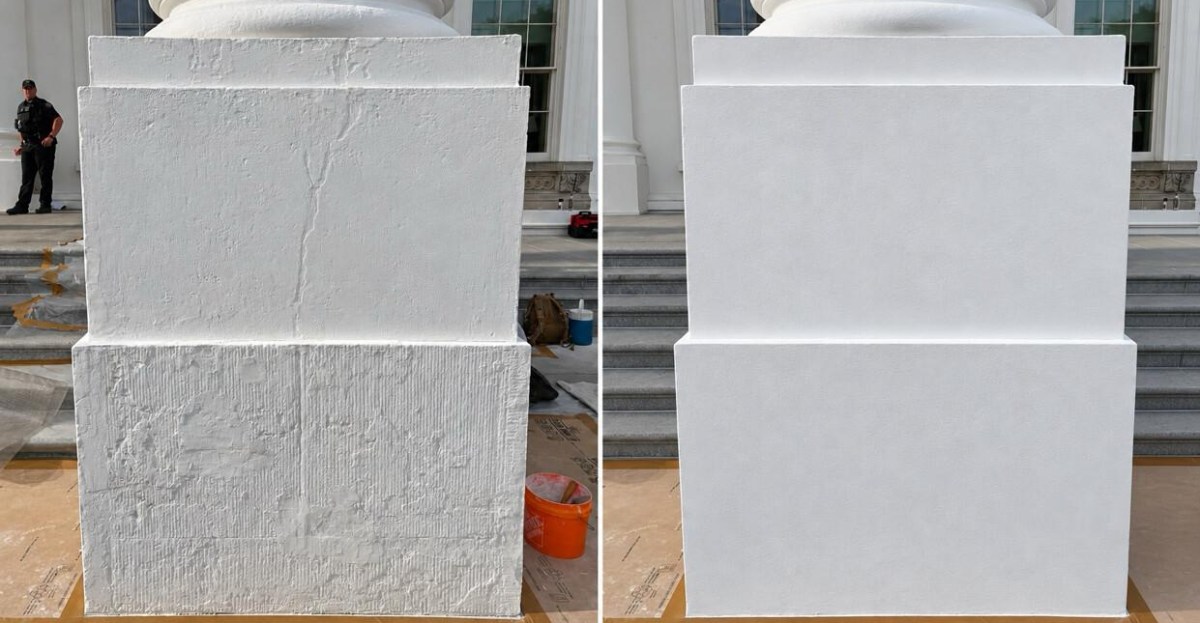
President Donald Trump posted a series of White House renovation images to Truth Social, including one Trump AI-edited White House photo that was flagged by an AI-watermark detector. The disputed image is a before-and-after comparison of a White House column, not a finding about every photograph in Trump’s post.
Trump described the images as pictures of a fully renovated south-facing White House facade, including a new South Entrance and heliport. He said he was proud of the work. Newsweek reported that Trump also claimed exterior walls and ornamentation had been restored, but he did not provide a detailed accounting of the work or its cost.
The Verge reported that it uploaded the column comparison to Google’s SynthID Detector, which returned a result saying the image was made or edited with OpenAI. The detector looks for an invisible watermark associated with AI-created or AI-edited media. A watermark result can indicate that an AI tool was used on a file; it does not, by itself, establish who edited it or which parts of the scene were changed.
Was Trump’s White House restoration photo AI-edited?
For the column comparison, the available evidence points to AI editing or generation. The Verge also identified visual irregularities in the image, including step counts that differed between the before and after views, an uneven number of steps across the structure, and nearly identical window reflections and protective cardboard placement in both halves. The allegedly repainted column also appeared unusually smooth. Those features are observations, not a separate forensic determination.
The finding does not show that White House restoration work did not happen. The Verge reported that photographs from June showed people painting the front of the White House, meaning the column could have received a new coat of paint. The reporting does not independently establish the exact work shown in the altered comparison.
The Verge said it did not find the SynthID watermark in the other photos Trump posted, which depicted the White House facade and heliport. The White House did not immediately respond to the publication’s request for comment.
That leaves a narrower conclusion than the post’s presentation suggests: one promotional before-and-after image carried a marker associated with AI editing, while separate reporting indicates that real exterior painting occurred. The available evidence does not identify the person who made the edit, the tool used, or whether Trump knew the image had been altered.
This story draws on original reporting from The Verge.