WIRED has revised its external storage recommendations for July 2026, and the shift is less about shiny new hardware than a price shock. The publication says SSD costs have risen sharply as AI data centers consume more memory, with some drives in its guide tripling in price over six months.
For people buying backup storage, that changes the math. WIRED says 8-terabyte SSDs now sell for more than a new MacBook Air, while the MacBook Air itself has risen by $200 to reflect higher memory costs. The practical recommendation is blunt: if the job is backups, old-school spinning hard drives look better than they did a year ago.
WIRED says it removed discontinued models, updated prices and links, and added SanDisk’s G-Drive ArmorATD because hard-disk drives have become more attractive while SSD prices climb. The site also discloses that its editors choose products independently, though it may receive compensation from retailer links.
Backups: capacity beats speed
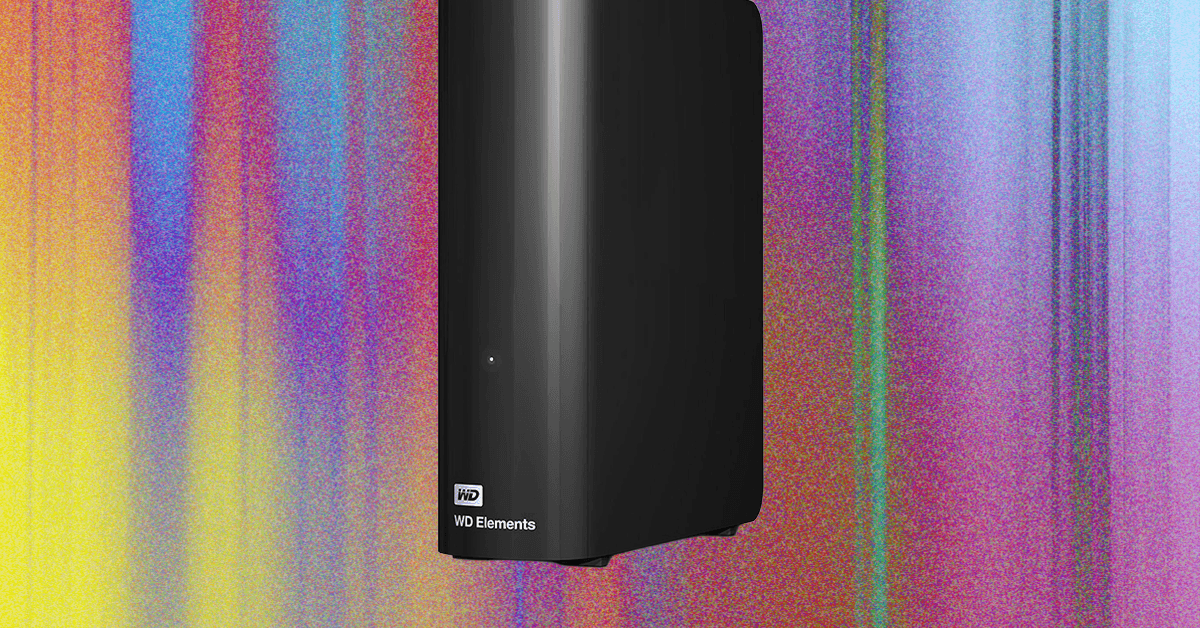
For desktop backups, WIRED’s top pick is Western Digital’s Elements Desktop Hard Drive. The 8-TB model is listed at $376 on Amazon and $380 at Adorama. It is not a pocket drive: it needs external power and is physically larger than portable models.
WIRED says that trade-off is acceptable for backup use, especially incremental backups that can run overnight. In its Windows testing, the Elements drive posted 120 MB/s for sequential writes. The drive uses USB-C with USB 3 support, and WIRED says it worked without trouble on Windows, macOS, and Linux.
The Elements line goes up to 20 TB, according to WIRED, which advises buyers to compare capacities because 10-TB and 12-TB versions can sometimes cost only slightly more than the 8-TB model. WIRED says it has not seen a major practical gap between Elements drives and Western Digital’s higher-end My Book line.
WIRED also names Seagate’s Expansion 8-TB external hard drive, listed at $280, as another backup option. The publication recommends using drives from different brands if maintaining multiple backups, to reduce the chance of two identical models failing together.
Travel drives and rugged options
For portable backups, WIRED recommends Western Digital’s My Passport Ultra. The drive is listed at $249, with a 5-TB model listed at $295. It uses a standard USB-C cable, comes in several colors, and is sold in capacities from 1 TB to 6 TB.
WIRED tested the 5-TB version across Windows, macOS, and Linux using CrystalDiskMark, AmorphousDiskMark, and KDiskMark. The averaged result was 121 MB/s reads and 115 MB/s writes. That is not field-ingest speed for a photo job, but WIRED says it is enough for a daily hotel-room backup.
SanDisk’s G-Drive ArmorATD is WIRED’s added rugged spinning-drive pick. The 1-TB model is listed at $195, and the 6-TB model at $400. It ships formatted as HFS+, making it ready for Apple Time Machine, while Windows users need to reformat it to exFAT. WIRED formatted it to ext4 for Linux testing.
The ArmorATD measures 3.4 by 5.1 inches and is under an inch thick, with a removable rubber sleeve and a protected USB-C port using USB 3.1 Gen 1. SanDisk claims 3.3-foot drop resistance and an IP54 rating, meaning splash resistance rather than immersion. WIRED measured 133 MB/s reads, near SanDisk’s 135 MB/s claim.
Speed still costs
For buyers who need the fastest portable drive in the guide, WIRED highlights LaCie’s Rugged SSD Pro5, a Thunderbolt 5 SSD listed at $1,600 to $1,700 for 4 TB. WIRED tested it on a new MacBook Pro 14 and described the results as strong, though Thunderbolt 5 hardware remains slow to appear in the market.
This story draws on original reporting from WIRED.