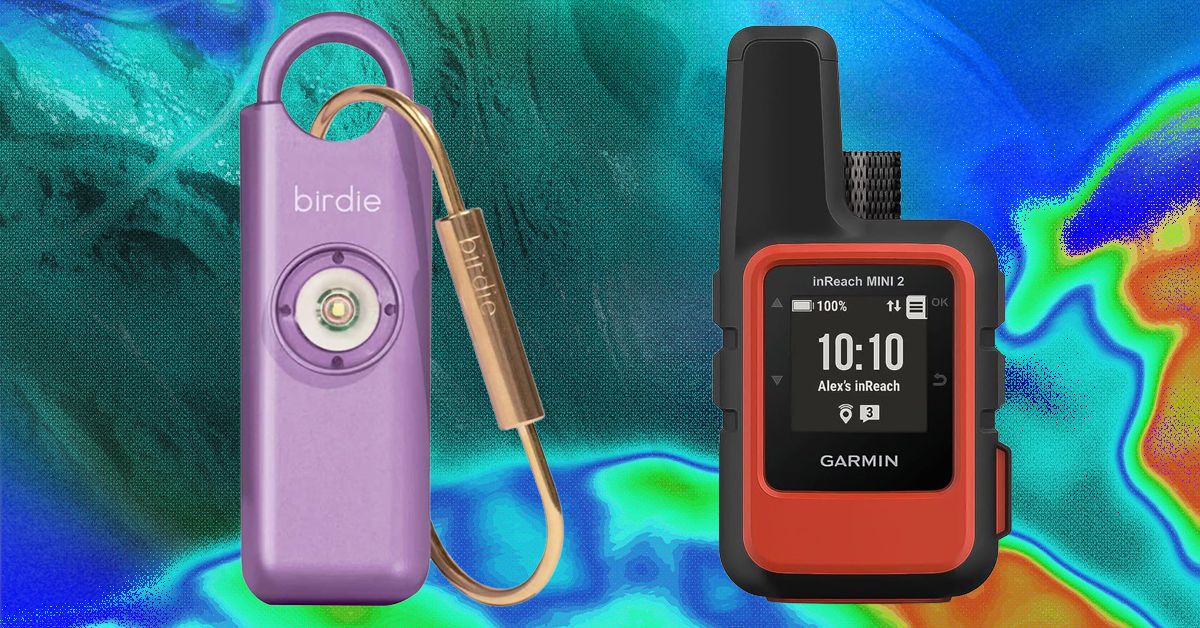
WIRED has updated its personal safety alarm recommendations for July 2026, narrowing its tested picks to four devices from She’s Birdie, InvisaWear, Sabre and Garmin. The list is aimed at people who want an alert tool rather than a weapon: families, commuters, solo runners, cyclists, hitchhikers and backcountry users.
The useful distinction here is mechanical. Some of these products are dumb loud objects, which is not an insult. Pull a pin or press a button, and the device tries to create attention fast. Others add subscriptions, location sharing, emergency operators or satellite messaging. That extra stack costs money and adds failure modes, because subscriptions and batteries are not vibes.
How WIRED says it tested them
WIRED said its reviewer activates every alarm and, where the product connects to emergency services, speaks with responders. The publication said it judges devices on portability, volume, price, ease of use and extra features.
For portable alarms, WIRED said its picks produce between 120 and 140 decibels. The testing also accounts for recurring charges, replacement batteries and whether battery life matches manufacturer claims. That is the right place to look, since a panic button with a dead battery is just jewelry with marketing copy attached.
The four picks
Best overall: She’s Birdie The Original. WIRED listed the original Birdie at $28 on Amazon. The device uses a pull pin to trigger a 130-decibel siren and a flashing strobe. WIRED said the speaker should be left uncovered and aimed toward the person or situation the user wants to disrupt. The point is diversion and attention, not confrontation.
Best for discreet use: InvisaWear Safety Wearables. WIRED named InvisaWear’s accessories, including necklaces, bracelets and keychains, as its pick for situations where a visible alarm is not ideal. The company is backed by ADT, according to WIRED. Former WIRED reviewer Medea Giordano tested the accessories and reported no feature problems, the publication said.
Best for runners and cyclists: Sabre 2-in-1 Clip-On Personal Alarm With LED Safety Light. WIRED listed the Sabre device at $16 from Sabre and $9 at Target during a discount. The weatherproof alarm clips to clothing, a backpack or a bike. Its LED has three modes: steady, slow flash and fast flash. Pressing the button triggers a 120-decibel siren that WIRED said is audible up to 1,300 feet.
Best for backcountry users: Garmin inReach Mini 2. WIRED listed Garmin’s inReach Mini 2 as its backcountry pick, with Amazon showing $310, down 23 percent from $400. The guide identifies it as a satellite messenger, a different class of safety device from the keychain sirens aimed at city streets and bike paths.
Subscriptions and replacement costs
WIRED said She’s Birdie has also released Birdie 3.0, a newer model the publication has not yet tested. That version is rechargeable, adds an on/off switch and includes a flashlight that can be used without sounding the siren. Its subscription costs $5 per month or $50 per year after a 30-day trial, and WIRED said it adds 24/7 live emergency support, location sharing with emergency contacts and a fake-call feature.
InvisaWear’s functions require a $20 monthly subscription, according to WIRED. The plan includes 24/7 ADT access, in-app chat, voice activation and virtual self-defense classes. WIRED said the battery is not rechargeable, and users will need to replace the button after a year or two at a discounted $99. InvisaWear also recommends monthly testing through the app’s “Place Test Alert” option, WIRED reported.
WIRED said it plans to test three more low-cost alarms next: the Taiker Personal Alarm for $9, the Kosin Personal Alarm for $18 and the Thopeb Original Safety Alarm for $19.
This story draws on original reporting from WIRED.