Texas Attorney General Ken Paxton, who has built a political brand around prosecuting alleged voter fraud, may have run into the residency rule his own office warned Texans about, according to reporting by ProPublica and The Texas Tribune.
The news organizations reported that Paxton has remained registered at a Collin County home shared with his wife, state Sen. Angela Paxton, and voted using that address in six elections over the past two years. That includes the May runoff in which he became the Republican nominee for U.S. Senate.
The possible problem is straightforward: Texas voters are supposed to register where they live. Paxton’s office said as much in February, when it announced a public tip line for reports of alleged illegal voting before the primary. The attorney general’s guidance warned that Texans may not misstate their residence on election paperwork or create a residence to affect an election outcome.
Angela Paxton said in a 2025 divorce filing that Paxton had left their Collin County home a year earlier. She accused him of adultery in that filing, according to ProPublica and The Texas Tribune. Angela Paxton declined an interview, and a person close to the Paxtons told the newsrooms that Ken Paxton has not returned to live at the home.
Paxton’s current residence has not been publicly established. ProPublica and The Texas Tribune reported several links between Paxton and a Denton County property since February. A trust bought a 5,000-square-foot home there that had been listed for $2.4 million, according to appraisal records and the seller’s real estate agent. A separate blind trust used by Ken and Angela Paxton later changed its listed address from a Collin County office building to that Denton County home.
Angela Paxton, through a spokesperson, said she has no tie to the Denton County house or to the trust that purchased it. Chip Loper, a family friend and trustee of the Paxtons’ trust, did not answer questions from the newsrooms.
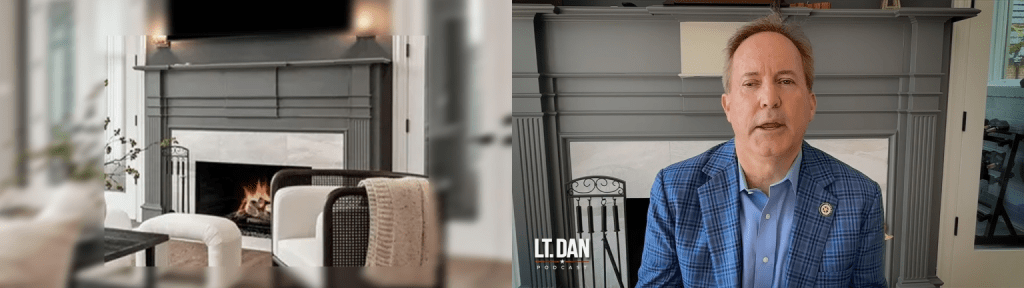
The reporting also cited an envelope addressed to Warren Paxton, the attorney general’s given name, visible in the mailbox when a reporter visited the Denton County property. In a June podcast appearance with Lt. Gov. Dan Patrick, Paxton sat in front of a fireplace and mantle that the newsrooms said closely resembled images in the home’s real estate listing. One resident told the newsrooms they had seen Paxton inside the gated community.
The Daily Mail separately reported in May that Paxton had moved into the Denton County home with Tracy Duhon, whom the outlet identified as the woman involved in an affair with Paxton. Duhon did not answer questions from ProPublica and The Texas Tribune about the property or that reporting.
Three election lawyers told ProPublica and The Texas Tribune that Paxton may have violated Texas election law. Voting while ineligible is a second-degree felony in Texas, punishable by up to 20 years in prison and a fine of up to $10,000. The lawyers also said such cases are difficult to prosecute because courts weigh several facts about residence, including where a voter sleeps and keeps belongings, and prosecutors must show the voter acted knowingly or intentionally.
Texas law also lets voters keep a registration address during a temporary absence if they intend to return. Beth Stevens, an election lawyer who previously worked for the Harris County clerk and the Texas Civil Rights Project, told the newsrooms that intent matters, but conduct suggesting a full move makes the claim more questionable.
David Becker, a former Justice Department voting rights lawyer who now leads the Center for Election Innovation and Research, said the facts would raise concerns if someone did not live at an address, did not sleep there and could not plausibly intend to keep residing there. He added that Paxton’s role enforcing election law makes the issue more serious.
Paxton’s campaign did not answer detailed questions sent by the newsrooms. Campaign spokesperson Madison Cercy instead called Paxton a national leader on election integrity and attacked the reporting as false and tabloid-style. Asked to identify specific inaccuracies, the campaign did not respond.
Paxton has previously pushed aggressive enforcement of alleged illegal voting, including a 2018 case in Edinburg involving accusations that voters used addresses where they did not live. Prosecutors later dismissed the charges after failing to convict the mayoral candidate accused of encouraging the registrations.
This story draws on original reporting from Techdirt.