AI-designed bacteriophages have produced 16 viable viruses in laboratory tests after researchers generated whole viral genomes with AI and tried nearly 300 of them in an Escherichia coli system. The work, published August 6 in Science, is a whole-genome design result, not evidence that an AI has designed a virus that infects people.
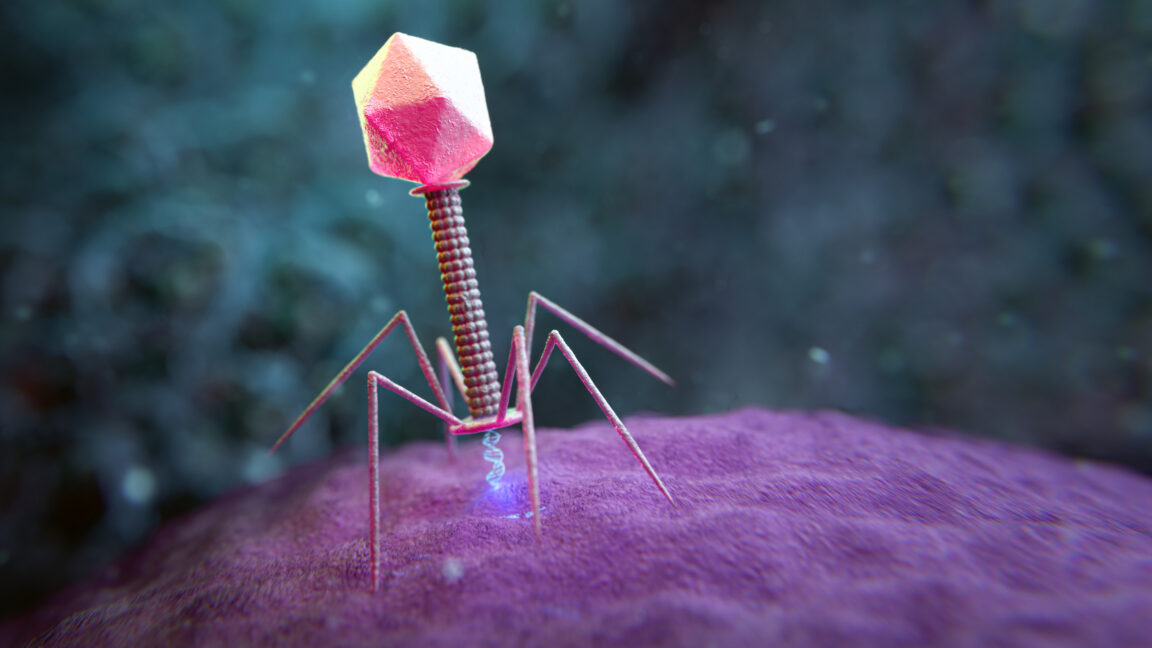
The research team used Evo 1 and Evo 2, genome language models that learn patterns from large collections of DNA sequences. Rather than proposing one protein or gene at a time, the models generated complete genomes for bacteriophages, viruses that infect bacteria. The target was E. coli C, using the well-studied phage ΦX174 as a reference.
That distinction does a lot of work. A bacteriophage uses bacterial cells to reproduce; the experiments reported here were conducted in bacteria under laboratory conditions. They were not animal studies, human studies, or a demonstration involving a virus that infects vertebrates.
What did the AI-designed bacteriophages actually do?
According to the Science paper, the researchers produced thousands of candidate sequences, then chemically synthesized and tested nearly 300. Sixteen yielded viable phages. That is a real experimental validation, but it is also a fairly unforgiving scorecard: most tested designs did not produce a working virus.
The viable candidates differed from known natural phages in sequence features, genes, regulatory elements and genome lengths, the paper reports. They also showed different fitness profiles in laboratory testing. The work therefore goes beyond asking whether a model can output DNA that looks plausible on a screen. The genomes had to function as coordinated biological systems after being put into bacterial cells.
In a resistance experiment, a mixture of the generated phages rapidly overcame ΦX174-resistant E. coli strains. A comparable mixture of naturally sourced ΦX174-like phages did not, according to Science. That points to a possible future use in phage-based approaches to bacterial infections, where bacterial resistance is a persistent problem. It does not establish a treatment: the reported evidence is from lab experiments, not clinical trials.
How far does this result reach?
Not very far yet. ΦX174 is a small, experimentally tractable phage, and the researchers tested a bacterial E. coli system. The evidence does not show that the method works for larger genomes or for viruses capable of infecting humans, other animals or plants.
The Guardian reported that the team deliberately excluded sequences from viruses that infect plants, people and other animals from the training data. The accompanying Science Perspective, by Thomas Inglesby and Moritz Hanke, warned that the ability to generate viral genomes raises biosecurity questions even as broader application remains unproven.
Filippa Lentzos of King’s College London told the Guardian that safeguards should not stop at the model. She called for layers that include controls on model access and development, responsible-research review, DNA-synthesis screening, and laboratory biosafety and biosecurity. That is the relevant boundary here: a demonstrated advance in generating functional phages for a bacterial E. coli test system, alongside open questions about scale, safety and governance.
This story draws on original reporting from Ars Technica.